Search for:
Tips on how to share a bedroom between siblings.
Making a Shared Bedroom Work

You can spend a small fortune on “sensory-neutral” dividers, designer bunk beds, and those expensive Montessori-style floor mats that promise to turn a cramped room into a peaceful sanctuary. But if you’ve ever been woken up by the sound of a four-year-old trying to use their brother’s forehead as a drum kit, you know that none of those gadgets actually teach you how to share a bedroom between siblings. I learned that the hard way with my second and third, when the “spatial boundaries” I’d read about in parenting magazines evaporated the second the lights went out. The books tell you about developmental milestones and social cohesion, but they rarely mention the sheer exhaustion of mediating a dispute over a stolen Lego piece at 3:00 AM.

I’m not here to sell you a lifestyle or a new piece of furniture. What I want to do is bridge the gap between the clinical advice I used to give on the paediatric ward and the messy, loud reality of my own house. I’ll give you the practical stuff that actually works—like how to manage the physical layout for different ages and when to just accept that a little bit of chaos is unavoidable. This isn’t about perfection; it’s about finding a way to make the room function so you can all finally get some sleep.

Table of Contents

Understanding How to Share a Bedroom Between Siblings
Understanding How to Share a Bedroom Between Siblings

The clinical manual will tell you that shared sleeping quarters promote social development and cooperation. In the ward, we saw kids bond in shared bays, but those kids didn’t have a three-year-old sibling who thinks a LEGO set is a projectile weapon. When you’re looking at a bedroom layout for two kids, you have to stop thinking about “decorating” and start thinking about territory. At age four, my second child decided that the middle of the floor was his sovereign nation, and anything crossing that line was an act of war.

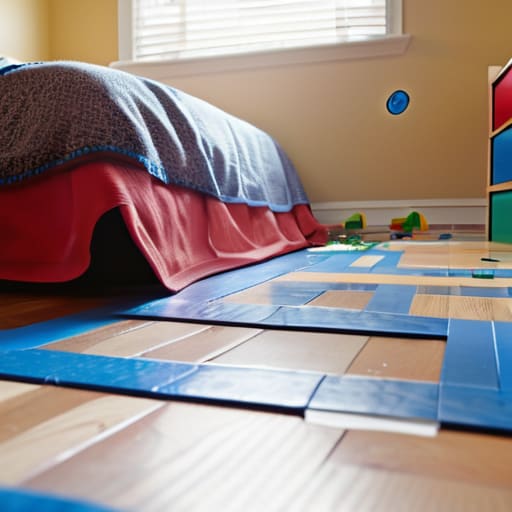
You can spend a fortune on fancy sibling room divider ideas, like bookshelves or hanging screens, but the physics of a small room often win out. The real work isn’t in the furniture; it’s in creating personal zones in shared rooms through much smaller, more manageable boundaries. I learned with my third, who was five, that even a rug or a specific bedside lamp can act as a psychological border. It’s about giving them a sense of “this is mine” so they don’t feel the constant, nagging need to grab what belongs to the other.

Key Things to Know

Key Things to Know: Small Bedroom Space

First, we need to talk about the developmental gap. When my eldest was four, he thought a shared room was a permanent invitation to a wrestling match; by the time my third was six, she needed a sanctuary that felt entirely hers. You cannot treat a four-year-old and a seven-year-old the same way, even if they are sharing the same four walls. The goal isn’t just maximizing small bedroom space; it’s about recognizing that a child’s need for privacy evolves. At age five, “privacy” might just mean a corner where their Lego doesn’t get stepped on, but by age nine, it’s about having a place to hide when they’re feeling overwhelmed.

You also have to accept that the “perfect” floor plan is a myth. I’ve spent many a night listening to the muffled arguments that happen when one child is trying to sleep and the other has decided it is the optimal time to practice their dinosaur roars. While you can look into various sibling room divider ideas—like bookshelves or even just clever rug placement—nothing replaces the need for clear, predictable rules. You aren’t just managing furniture; you are teaching kids to share space, which is a much harder skill than any interior designer would ever admit.

Practical Tips and Steps
Practical Tips and Steps for sibling rooms.

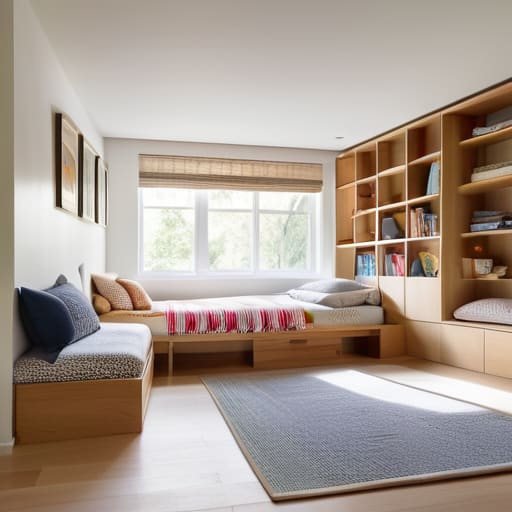
First, we need to talk about the physical setup, because you can’t expect harmony if they’re constantly tripping over each other’s Lego. When I was looking at my second and third, I realized that maximizing small bedroom space isn’t just about clever storage; it’s about sightlines. If they can see each other’s every move, they will find something to comment on. I found that using low bookshelves as sibling room divider ideas worked wonders for my five-year-old and three-year-old. It gave them a visual “mine” and “yours” without making the room feel like a dark cave.

Once the layout is settled, the real work begins: teaching kids to share space without a meltdown. You have to establish “zones.” Even in a tiny room, a specific rug or a certain corner can be designated as a person’s private territory. I tell my kids that if they are in the “Blue Zone,” they are off-limits for toy borrowing unless they ask. It sounds simple, but when you’re dealing with a four-year-old who has the impulse control of a caffeinated squirrel, having these clear, non-negotiable boundaries is the only thing that prevents the inevitable 6:00 AM shouting match.

Common Mistakes to Avoid

The biggest mistake I see—and I fell for it with my second and third—is trying to force a “perfect” equality that doesn’t exist. You might spend a whole weekend maximizing small bedroom space to make sure both beds are identical and both toy bins are perfectly symmetrical, but children aren’t symmetrical. One child might be a quiet reader who needs a cocoon, while the other is a whirlwind of movement. If you try to make their environments carbon copies, you’ll just end up with two frustrated kids instead of one.

Another trap is assuming that “sharing” is a skill they are born with. It isn’t. We often treat it like a given, but teaching kids to share space is actually a massive, ongoing negotiation. I used to think that if I just set up some clever sibling room divider ideas, like a bookshelf or a curtain, the conflict would vanish. It didn’t. The divider just gave them something new to fight over. You can’t solve a territorial dispute with furniture; you have to acknowledge that the friction is a normal part of the process, not a sign that your floor plan has failed.

Final Thoughts

Look, if you’ve followed everything I’ve said here and you’re still staring at a pile of mismatched LEGO and two kids who refuse to acknowledge each other’s existence, please know that you haven’t failed. There is no perfect blueprint for maximizing small bedroom space when you have two distinct, stubborn personalities living inside it. I remember when my second and third tried to share; I had all the best sibling room divider ideas ready to go, but it took nearly six months before they stopped treating the middle of the floor like a demilitarized zone.

Ultimately, you aren’t just managing furniture; you are teaching kids to share space and, more importantly, how to navigate the friction that comes with it. Some nights the layout will work, and some nights you’ll find yourself standing in the hallway at midnight wondering why a disputed stuffed animal has caused a total breakdown in diplomacy. Just remember that the goal isn’t a showroom-ready bedroom; it’s a room where they can eventually grow up to be friends. Give it time, and give yourself a bit of grace when it inevitably goes sideways.

Five ways to survive the transition without losing your mind

  • Respect the ‘micro-territory.’ When my second child was three and my third was just a tiny infant, I realized that a shared room isn’t about equal square footage; it’s about having one thing that is yours. Whether it’s a specific rug, a certain bedside shelf, or even just a particular way their books are stacked, that tiny bit of un-invadable space is what prevents the “he touched my stuff!” meltdown at 10:00 PM.
  • Master the art of the ‘visual barrier.’ The textbooks talk about developmental stages, but they don’t mention the sheer chaos of a four-year-old watching a toddler play with a light-up dinosaur in the middle of the night. If you can’t use a physical divider like a bookshelf, even a simple canopy or a change in how the beds are positioned can help. If they can’t see the other person’s movement, their brain is much more likely to stay in sleep mode.
  • Implement a ‘low-sensory’ rule for shared spaces. In the ward, we called it managing the environment, but at home, it’s just about survival. If one child is a light sleeper and the other is a human wrecking ball, you need a strict protocol for noise and light. This means dimmers, white noise machines (which were a godsend when my eldest was five), and a very clear rule that “play” happens in the living room, not under the duvet.
  • Don’t expect the ‘fairness’ logic to work. One of the biggest mistakes I made with my first two was trying to make everything identical to avoid conflict. It doesn’t work. A five-year-old and a two-year-old have fundamentally different needs. Trying to force them into the same routine or the same bedspreads usually just results in someone feeling cheated. Accept that the older one gets more ‘complexity’ and the younger one gets more ‘simplicity.’
  • Build in an ‘escape hatch’ for the inevitable meltdown. There will be a night—usually around month three of the new arrangement—where the screaming becomes a physical weight in the room. Have a plan for where the ‘offender’ goes. Sometimes that means a temporary move to a parent’s bed or a floor mattress in the hallway. It isn’t a failure of your parenting or a permanent breakdown of the system; it’s just a tactical retreat so everyone can get some actual sleep.

The Short Version (For when you're too tired to read)

Preparation is a theory, but boundaries are a practice; you can map out the room perfectly on a Sunday afternoon, but you’ll need to adjust the physical “zones” every time a child hits a new developmental milestone or a growth spurt.

Sleep is the non-negotiable metric; if the shared room is causing one child to lose more than an hour of restorative sleep a night, the “social benefits” of sibling bonding aren’t worth the developmental cost, and it might be time to reconsider the layout.

Expect the “honeymoon phase” to fail; it worked for my second child when they were four and five, but it only stayed peaceful because we accepted that there would be a messy, loud transition period where the rules had to be rewritten every single week.

The Long Game

At the end of the day, you can buy all the dividers, dimmable lights, and noise machines in the world, but they won’t stop a four-year-old from deciding that 3:00 AM is the perfect time to whisper a “secret” about a dinosaur to their sleeping brother. You’ve looked at the layouts, you’ve set the boundaries, and you’ve probably already failed at least once this week when the “spatial separation” turned into a wrestling match. Just remember that there is no perfect setup. Whether you’re managing different sleep cycles or just trying to prevent a territorial dispute over a Lego set, the goal isn’t a flawless, silent room; it’s a space where they can eventually learn to coexist without you needing to step in every ten minutes.

If you’re feeling like you’ve missed something or that your kids are “failing” at sharing, please stop. I’ve seen it from the nursing side and the parent side, and I can tell you that conflict is part of the development, not a sign of bad parenting. These years of cramped quarters and shared territory are messy, loud, and often exhausting, but they are also the years where they learn the most about each other. One day, they won’t be fighting over the bedside lamp; they’ll be adults who actually know how to be in a room together. For now, just get through the night, and know that you’re doing much better than the textbooks lead you to believe.


Learning how to build resilience through struggle.
Resilience Comes From Struggle You Survive

If you search for “how to build resilience” online, you’ll mostly find two things: expensive developmental workshops for toddlers or lofty, academic jargon about “emotional regulation protocols.” It’s enough to make you want to close the laptop and go back to sleep. I spent eleven years on a paediatric ward hearing doctors explain these complex theories to exhausted parents, and then I spent the next decade having four children prove that none of it works the way the textbook says it should. You don’t build grit through a structured curriculum or a series of mindfulness exercises when your four-year-old is having a meltdown in the middle of a supermarket because the wrong brand of yoghurt was on the shelf.

I’m not here to sell you a lifestyle or a five-step program that requires a PhD to implement. Instead, I want to talk about the messy, unglamorous reality of what actually works. I’ll be sharing what the clinical evidence suggests, but more importantly, I’ll tell you what I learned when my own kids were hitting those inevitable, soul-crushing milestones. We’ll look at the real-world failures and the small, quiet wins that actually matter. This isn’t about perfection; it’s about surviving the chaos and helping them find their feet when things go sideways.

Table of Contents

Understanding How to Build Resilience

Understanding How to Build Resilience through adaptation.

In the clinical world, we talk about resilience as if it’s a muscle you can just train with the right set of repetitions. The textbooks love terms like psychological flexibility—the idea that a child can adapt to changing circumstances without breaking. And, theoretically, that’s correct. When my eldest was four, he had a meltdown because his favourite blue cup was in the dishwasher; he wasn’t just being “difficult,” he was experiencing a genuine failure of his internal ability to pivot. In those moments, you realize that building resilience isn’t about preventing the meltdown, but about how we navigate the aftermath.

It’s easy to get lost in the jargon of growth mindset development or complex coping mechanisms, but for a parent, it usually looks a lot messier. It’s less about “teaching lessons” and more about being the steady person in the room while they fall apart. You aren’t building a shield that makes them untouchable; you’re helping them build a toolkit so that when the world inevitably pushes back, they have the tools to pick themselves up. It’s a slow, often frustrating process of trial and error.

Key Things to Know

Key Things to Know About Resilience.

First, let’s strip away the idea that resilience is some kind of armour you bolt onto a child. In the ward, I saw kids who were “tough” in the sense that they didn’t cry, but they were often brittle; the moment things went wrong, they shattered. True resilience is more about psychological flexibility—the ability to bend when the wind blows without snapping. It’s not about preventing the meltdown; it’s about how we help them navigate the aftermath. My eldest, Leo, was about four when I realised that trying to “fix” his frustration only made him more frantic. He didn’t need a lecture; he needed to know that feeling overwhelmed wasn’t a permanent state.

Second, you have to distinguish between teaching mental toughness techniques and simply letting a child struggle alone. There is a massive difference between a child learning to tie their shoes after ten attempts and a child feeling utterly abandoned in their grief. We want to foster growth mindset development, where they see a mistake as data rather than a character flaw, but that requires a foundation of safety. If they don’t feel safe, they aren’t learning to cope; they’re just learning to survive.

Practical Tips and Steps

Practical Tips and Steps for resilience.

When I was on the ward, I saw kids who could bounce back from a scary procedure with a shrug, and others who folded the moment things got uncomfortable. The difference wasn’t magic; it was about how they were taught to handle the “messy middle.” For a four-year-old, this isn’t about teaching complex stress management for resilience; it’s about the way you react when they drop a bowl of cereal. If you can model psychological flexibility—meaning you show them it’s okay to be frustrated, but it’s also okay to clean it up and try again—you are laying the groundwork. You aren’t building a robot; you’re building a person who knows that a mistake isn’t a dead end.

By the time my second child hit six, I realized that “toughness” was a bit of a misnomer. It’s less about being hard and more about having a toolkit. I started focusing on growth mindset development by catching them doing things the hard way. Instead of saying “you’re so smart,” I’d say, “I saw how you kept trying that Lego tower even when it fell.” It feels small, and when you’re exhausted, it feels like a drop in the ocean, but that’s where the actual overcoming adversity strategies begin.

Common Mistakes to Avoid

The biggest mistake I see—and I’ll admit, I fell into this trap with my second child—is the urge to swoop in and fix everything immediately. When you see your kid struggling with a broken toy or a playground snub, every instinct screams at you to intervene. But if you always clear the path, you never actually give them the chance to practice psychological flexibility. By removing every obstacle, we accidentally teach them that they aren’t capable of handling discomfort. I remember my eldest, about four years old, having a meltdown because he couldn’t get a Lego piece to click; I tried to do it for him, and all I did was signal that his frustration was a problem to be solved rather than a feeling to be managed.

Another pitfall is confusing “toughness” with silence. There’s a common misconception that building resilience means teaching kids to just “get on with it” without making a fuss. That’s not resilience; that’s just suppression. Real emotional intelligence and coping mechanisms aren’t built by ignoring the storm, but by learning how to navigate through it. If we teach them that being upset is a sign of weakness, they won’t learn how to recover; they’ll just learn how to hide.

Final Thoughts

If there is one thing I learned from eleven years on a paediatric ward, it’s that you can’t actually “build” a child like you’re assembling flat-pack furniture. There is no magic sequence of steps that guarantees they’ll be bulletproof. You can read all the books you want about growth mindset development, but when your four-year-old is having a meltdown because their toast was cut into triangles instead of squares, the theory goes right out the window. Resilience isn’t about preventing the struggle; it’s about being the person they can come to when the struggle inevitably happens.

At the end of the day, don’t aim for perfection. If you try to implement every single stress management for resilience technique you’ve read online, you’ll just end up as exhausted as I am. Some days, “resilience” is just getting through the bedtime routine without anyone crying. That counts. Give yourself the same grace you’re trying to give them. You’re doing a much better job than you think you are, even on the nights when it feels like you’re just winging it.

Five ways to actually practice resilience (without the textbook fluff)

  • Let them fail small. The textbooks love talking about “autonomy,” but in practice, that means letting your four-year-old struggle with a stubborn Velcro shoe for three minutes instead of swooping in to do it. If you solve every micro-crisis, they never learn that they are capable of solving them themselves. I learned this the hard way with my second; I was so busy being “efficient” that I was accidentally teaching him he couldn’t handle anything.
  • Model the “recovery,” not the perfection. When I dropped a tray of pasta at 6:00 PM—which, in a house with four kids, is a regular occurrence—my instinct was to swear and hide in the pantry. But resilience isn’t about never dropping the tray; it’s about how you react when you do. I started saying out loud, “Well, that was frustrating, but I can clean it up,” and suddenly, my kids stopped seeing a disaster and started seeing a process.
  • Name the feeling, but don’t let it drive the bus. When my eldest was six, he’d have these massive meltdowns because he couldn’t get a Lego set right. The “clinical” advice is to validate the emotion, which is good, but the real-world trick is: “I see you’re angry, and that’s okay, but we aren’t going to throw the bricks.” You acknowledge the storm without letting the storm wreck the house.
  • Scaffolding, not hovering. Think of it like my old job on the ward; we didn’t just do everything for the child, we gave them the tools to do it. For a toddler, that might be giving them two choices (the red cup or the blue cup) to give them a sense of control. For a ten-year-old, it’s helping them map out a plan for a school project rather than doing the research for them. You provide the structure, but they have to walk the path.
  • Protect the sleep (and your own sanity). This sounds like a non-sequitur, but you cannot build emotional resilience in a state of total sleep deprivation. I’ve seen it a thousand times on the ward and in my own living room: a child who is “acting out” or “lacking resilience” is often just a child who is exhausted. If it’s 3:00 AM and everything is falling apart, the most “resilient” thing you can do is stop trying to teach a lesson and just focus on getting everyone to sleep.

The Reality Check

Resilience isn’t a skill you “teach” through a series of drills; it’s what happens in the messy, unscripted moments when things go wrong, and it’s built much more by your reaction to their meltdown than by any perfect parenting technique.

Don’t aim for a child who never struggles; aim for a child who knows they can come to you when they do. When my second was four, I realised I was so focused on fixing his problems that I was actually teaching him that struggle was something to be avoided rather than managed.

Watch out for the “Resilience Trap”—the idea that if you just do everything right, your child will be bulletproof. The goal isn’t to remove the obstacles, but to give them the tools to navigate them, which usually means letting them fail a little bit while you’re standing nearby, even when it’s hard to watch.

One Last Thing Before the Chaos Returns

If you take anything away from this, let it be that resilience isn’t a switch you flip or a skill you teach in a single afternoon workshop. It is built in the small, messy, often frustrating gaps between the big milestones. It’s in the way you handle the meltdown over the wrong colored cup, the way you validate a fear about the dark, and—crucially—the way you model your own recovery when you lose your temper. The research tells us that consistent, predictable environments are the foundation, but my experience with four kids tells me that the foundation is often being rebuilt while the house is shaking. Don’t aim for perfection; aim for showing up repeatedly, even when you’re exhausted and the guidance feels completely irrelevant to your actual life.

There will be days when you feel like you are failing because your child isn’t “bouncing back” as quickly as a parenting book promised they would. Please, hear me on this: resilience is not the absence of struggle. It is the ability to navigate through it, and sometimes, navigating through it just looks like a very long nap or a very loud cry. You are doing the heavy lifting of preparing them for a world that isn’t always kind, and that is some of the hardest work there is. You don’t need to have all the answers right now; you just need to keep being their safe place to land.

How to spot illness in a baby.
Red Flags in a Baby That Mean Call Now

I remember sitting in a dimly lit cubicle on the paediatric ward, holding a father’s hand while he stared at a printed pamphlet that told him to “monitor for changes in activity levels.” It was useless, clinical nonsense. That man didn’t need a textbook; he needed to know why his six-month-old’s breathing sounded like a broken bellows and whether he should be running for the car or just trying to get through the night. When you’re staring at a silent, pale infant at 3:00 AM, you don’t need a list of medical jargon; you need to know how to spot illness in a baby when your own brain is fogged by sheer, unadulterated terror.

I’m not going to give you a checklist that assumes you’re reading this in a well-lit room with a cup of tea. Instead, I’m going to tell you what I learned during eleven years of night shifts and four rounds of my own children’s various bug outbreaks. I’ll show you the difference between a manageable fever and a genuine red flag, and I’ll tell you exactly which symptoms actually warrant a trip to A&E and which ones just require a bit of patience and some extra fluids.

Table of Contents

The Manual vs the Reality How to Spot Illness in a Baby

The Manual vs the Reality How to Spot Illness in a Baby

If you look at a clinical handbook, they’ll tell you to focus on objective data: the exact degree of a fever or a specific count of wet nappies. They’ll talk about monitoring infant temperature as if you’re doing a lab experiment, rather than trying to do it while your toddler is using your leg as a climbing frame. The manual says a fever is a number; the reality is that a fever is often just the background noise to a much bigger question: how is my baby actually acting?

In the ward, we looked for the clinical red flags, but at home, you’re looking for the “shift.” I remember with my second, he was 4 months old and had a temperature that looked fine on the thermometer, but he just wasn’t there. He wasn’t hitting his usual milestones of fussiness or engagement. You need to watch for baby lethargy signs—that heavy, limp quality where they aren’t just sleepy, but difficult to rouse. It’s the difference between a baby who is exhausted from a long day and a baby who is fading. The textbook gives you the symptoms, but your gut usually notices the change in rhythm long before the thermometer does.

Monitoring Infant Temperature When to Call and When to Sleep

Monitoring Infant Temperature When to Call and When to Sleep

Here is the reality of the thermometer: it is a piece of plastic that provides a number, but it doesn’t provide context. When I was working the wards, we taught parents that a fever is just the body doing its job, a sign the immune system is waking up. But when you are sitting in a dark room with a red-faced six-month-old, a reading of 38.5°C feels like a crisis. The truth is, you should be monitoring infant temperature alongside how they actually act. If they have a fever but are still making eye contact and occasionally offering a weak smile, you can usually wait for the morning. If that fever is paired with baby lethargy signs—meaning they are floppy, difficult to rouse, or just “not there”—that is when the number on the screen matters much less than the person in your arms.

I remember my second, Leo, hit 39°C at midnight. He was miserable, yes, but he was still drinking his milk and peeing regularly. I spent an hour hovering, but I eventually went to bed because he wasn’t showing infant dehydration symptoms or any real distress. However, if you notice a sudden drop in wet nappies or a complete refusal to feed, stop checking the temperature and start making the phone call. You aren’t just looking for heat; you are looking for a change in their baseline.

The Red Flags Recognizing Critical Pediatric Emergency Indicators

The Red Flags Recognizing Critical Pediatric Emergency Indicators

Now, we need to talk about the stuff that actually matters—the “get to the A&E right now” moments. In the ward, we call these pediatric emergency indicators, but in your living room, they just feel like pure, unadulterated terror. The first thing I always tell parents is to look at the work of breathing. If you see their chest sucking in deeply at the ribs or the base of the throat with every breath, that is infant respiratory distress, plain and simple. It isn’t just a stuffy nose or a bit of congestion; it’s a physical struggle for air. When my second child was eighteen months old, I mistook his heavy breathing for a nap, but the moment I saw that rhythmic tugging at his ribs, the “nurse” in me took over and the “tired dad” went out the window.

The second big one is the “vibe check,” which sounds unscientific but is actually vital. You are looking for baby lethargy signs—not just a baby who is sleepy because they’ve been teething, but a baby who is difficult to wake. If they aren’t responding to your voice or aren’t interested in their favourite toy, that’s a problem. Pair that with changes in baby feeding patterns, like refusing a bottle or nursing weakly, and you’re likely looking at infant dehydration symptoms. If they aren’t wetting nappies like they usually do, don’t wait until morning to see if it improves.

Watching for Infant Respiratory Distress in the Dark

When you’re sitting in the dark, the only sound is the rhythmic hum of the baby monitor, and that’s when every little gasp feels like a catastrophe. But there is a difference between a noisy sleeper and actual infant respiratory distress. When I was working the night shift on the ward, I’d tell parents to look for the “work.” If you see the skin pulling in tight around their ribs or the little dip at the base of their throat every time they take a breath, that’s the body working too hard. It’s not just a heavy sleeper; it’s a sign they are struggling to move air.

You also need to look at the rhythm. A healthy baby breathes fast, but it should be regular. If the breathing is erratic, or if you notice sudden changes in baby feeding patterns—like they can’t stay on the breast or bottle for more than a minute because they’re too busy gasping for air—that is your cue to stop trying to “wait and see.” When the effort of breathing starts to interfere with eating, the window for staying calm and observant is closing.

Decoding Changes in Baby Feeding Patterns and Infant Dehydration Symptoms

When you’re looking at a sick baby, the most reliable data isn’t usually a thermometer; it’s the feeding bottle or the breast. I remember with my second, a six-month-old, the clinical textbooks said to watch for “decreased intake,” but that sounds so sterile. In reality, it looks like a child who is too exhausted to latch, or a baby who starts a feed and then just… stops, drifting off because they simply don’t have the energy to suck. If you notice sudden changes in baby feeding patterns, especially if they are refusing multiple feeds in a row, that is your cue to stop trying to “wait and see” and start calling the triage line.

The real danger with poor feeding is how quickly it leads to infant dehydration symptoms. You aren’t just looking for a dry mouth; you’re looking for the subtle shifts. By the time a baby has a sunken soft spot or hasn’t had a wet diaper in eight hours, you’re already playing catch-up. Watch for extreme irritability or, conversely, a heavy, limp quality that looks like baby lethargy signs. If they feel “floppy” when you pick them up, don’t wait for morning. That’s not just a bad night; that’s a reason to head to A&E.

The Truth About Baby Lethargy Signs and Midnight Panic

This is where the textbooks and the real world collide most violently. In a clinical setting, we define lethargy as a lack of response to stimuli. In a dark bedroom at 3:00 AM, it feels more like a heavy, hollow dread in your chest. You’re looking at your baby—who is usually a whirlwind of limbs and noise—and they are just… still.

The tricky part is distinguishing between a baby who is simply exhausted from a growth spurt and genuine baby lethargy signs. When my second child was four months old, he went through a period of being incredibly “chill” during feeds. I spent two hours convinced he was slipping into something serious, only to realize he was just incredibly sleepy.

However, there is a line. If they aren’t just sleepy, but are actually difficult to wake, or if they lack that “spark” even when you’ve changed their nappy or offered a feed, that is when you stop questioning yourself and start calling for help. If the lethargy is paired with infant dehydration symptoms, like fewer wet nappies or a sunken soft spot, don’t wait for morning. Trust your gut; it’s usually more accurate than a Google search at midnight.

Five Things to Watch for When the Panic Starts Setting In

  • Trust the “vibe” change over the thermometer. A thermometer gives you a number, but your gut tells you if something is wrong. When my second was six months old, his temperature was barely elevated, but he just looked… “off.” He wasn’t meeting my eyes. If the number is normal but the baby feels fundamentally different to you, trust that instinct. That’s the one that usually warrants a call to the GP.
  • Watch the wet nappies, not just the milk intake. You can spend an hour trying to force a fussy, sick baby to take a bottle, which is exhausting and often futile. Instead, stop counting ounces and start counting nappies. If they haven’t had a heavy wet one in six to eight hours, they’re dehydrating. That is a concrete, measurable metric that moves you from “I think they’re sick” to “I know they need medical attention.”
  • Check the skin color, not just the temperature. When I was on the ward, we weren’t just looking for heat; we were looking for pallor or mottling. If your baby looks unusually pale, or if their skin has a greyish, dusky tint—especially around the lips—forget the fever charts and get to A&E. A fever is a symptom; a change in skin perfusion is an emergency.
  • Listen to the quality of the cry. There is a massive difference between the “I’m hungry and this is unfair” scream and the “something is physically wrong” wail. The latter is often high-pitched, inconsolable, and doesn’t break even when you pick them up or change them. If you’ve tried the rocking, the feeding, and the changing, and that piercing cry persists for more than twenty minutes, it’s time to seek help.
  • Observe the “work” of breathing in the light. It is incredibly hard to judge respiratory distress in a dim nursery at 3:00 AM. If you think they are struggling, don’t just squint at their chest in the dark. Turn on the light. Look for the skin pulling in around the ribs or the base of the throat (retractions) or the nostrils flaring with every breath. If you see that physical effort, stop second-guessing yourself and call for help.

The Three Things to Hold Onto When the Panic Sets In

Trust your gut over the thermometer; if your baby’s temperature is technically “normal” but they just look wrong—that glassy-eyed, heavy-limbed look that doesn’t sit right in your stomach—call the professional. When my second was eighteen months, the reading said fine, but my instinct said something was very wrong, and I was right.

Learn the difference between “exhausted” and “unresponsive.” A baby who is crying themselves to sleep because they are overtired is a different creature entirely from a baby who you cannot rouse or who doesn’t react when you change their nappy; if they aren’t engaging with the world at all, stop checking the guidebook and start calling for help.

Focus on the “big three” mechanics: breathing, hydration, and alertness. If the way they breathe looks like they’re working too hard, if they aren’t wetting enough nappies, or if they’ve gone from a whirlwind to a ghost, those are your real indicators, regardless of what any colorful parenting app tells you.

The Final Gut Check

If you take nothing else from this, remember that spotting illness isn’t about memorising a medical textbook; it’s about knowing your own child’s baseline. You’ve spent months watching them breathe, eat, and react to the world, and that intuition is your most powerful tool. Whether you are checking for the dreaded respiratory pull, monitoring a fever that won’t budge, or trying to figure out if a sudden drop in wet nappies is a crisis or just a growth spurt, trust that clinical red flags matter, but so does your gut. If something feels fundamentally “off”—that heavy, sinking feeling in your stomach that tells you this isn’t just a standard fussy night—then trust it. It is always better to call a professional and be told you’re overreacting than to sit there second-guessing yourself while your child suffers.

Finally, please hear me when I say this: being hyper-vigilant doesn’t make you an anxious parent, and being exhausted by the constant monitoring doesn’t make you a bad one. I remember sitting on the floor of my kitchen at 3:15 AM with my second child, heart hammering because his breathing sounded slightly different, feeling like a complete failure because I couldn’t tell if I was being “rational” or not. You are doing the hardest job in the world in the middle of the night, often without a manual that actually works. You are the expert on your baby, and you are doing enough. Take a breath, check the breathing, and if the panic is real, make the call. You’ve got this.

Tips on how to manage toddler screen use.
Screens for Toddlers: Co-viewing Changes Everything

I’ve sat in enough hospital breakrooms to know that the “experts” love a good, clean rule, but they rarely account for the sheer, bone-deep exhaustion of a Tuesday afternoon. You’ll read a dozen articles on how to manage toddler screen use that suggest you should provide curated, educational content in a quiet, distraction-free environment—as if you have a quiet environment or a spare brain cell to give. The truth is, most of that advice is written for people who don’t have a two-year-old currently trying to eat a handful of dried pasta off the floor while you’re desperately trying to boil an egg.

I’m not here to give you a lecture on developmental milestones or judge you for using a tablet to buy yourself ten minutes of peace to drink a coffee while it’s still hot. Instead, I want to talk about the middle ground. I’ll give you the clinical reality of what the brain actually needs, but I’ll pair it with the practical, messy ways I’ve learned to navigate it with my own four kids. We’re going to look at what works, what fails spectacularly, and how to stop feeling like a failing parent just because you needed a moment of silence.

Table of Contents

Understanding How to Manage Toddler Screen Use

Understanding How to Manage Toddler Screen Use

When I was on the ward, I’d see parents looking absolutely gutted because they’d let their two-year-old watch a show just to finish a lukewarm cup of tea. There is a massive gap between the clinical understanding of the impact of media on early development and the sheer, bone-deep exhaustion of a Tuesday afternoon. The science tells us that too much passive stimulation can mess with attention spans and sleep cycles, but the science doesn’t help when you are trying to cook dinner while a tiny human is having a meltdown in your kitchen.

The real trick isn’t about total prohibition; it’s about distinguishing between educational vs passive viewing. My second child, who was about two and a half, could watch a slow-paced show about trains and then go play with his blocks for twenty minutes. But when we switched to those high-speed, neon-colored sensory videos? He’d become a different person—wired, agitated, and impossible to transition away from the iPad. Developing healthy screen time habits starts with noticing those shifts in their temperament. It’s less about the minutes on the clock and more about how the content leaves them feeling when the screen finally goes dark.

Key Things to Know

Key Things to Know: Educational vs Passive.

First, let’s talk about the distinction between educational vs passive viewing. In the ward, I saw plenty of kids who were “fine” but completely zoned out, eyes glazed, just absorbing whatever neon light was hitting them. There is a massive difference between a toddler actively engaging with a program that asks them to find a red shape, and a child being used as a digital pacifier to stop a meltdown. One is an interaction; the other is just a way to turn the volume down on life.

Second, you need to understand the impact of media on early development, specifically regarding how it affects their ability to self-regulate. When I was nursing, we saw kids who couldn’t handle the “boring” parts of being a patient because they were used to constant, high-speed stimulation. If we want to build healthy screen time habits, we have to accept that real life is often slow, quiet, and occasionally quite frustrating.

Finally, remember that boundaries aren’t about being a drill sergeant; they are about predictability. My second child, Leo, was four when we finally figured out that a visual timer worked better than a shouted “five more minutes” from the kitchen.

Practical Tips and Steps

Practical Tips and Steps for screen transitions.

The first thing I learned—usually while trying to cook dinner with a two-year-old hanging off my leg—is that you cannot just “set a boundary” with a device. You have to build a bridge to whatever comes next. If you just snatch the iPad away, you aren’t just stopping a show; you’re crashing a dopamine party. Instead, try the “five-minute warning” approach. I started doing this with my second child when they were about two and a half, and it changed everything. Don’t just say “five minutes”; use a visual timer or a physical cue. It helps them transition from educational vs passive viewing back into the real world without the meltdown that usually follows a sudden digital blackout.

Next, focus on what you are replacing the screen with. If you’re using a tablet to keep them quiet during a long car journey, that’s one thing, but if it’s become the default babysitter every evening, you’ll hit a wall. I’ve found that toddler screen time alternatives like “busy bags”—essentially a small pouch of new, tactile toys like stickers or chunky puzzles—work wonders. The goal isn’t perfection; it’s about creating healthy screen time habits that don’t leave you feeling like a failure when you occasionally use a cartoon to get through a grocery shop.

Common Mistakes to Avoid

The biggest mistake I see—and I’ve made it myself when the house felt like it was collapsing—is treating screen time as a “set and forget” tool. We often fall into the trap of thinking that as long as the content is “educational,” it’s fine. But there is a massive difference between educational vs passive viewing. You can have a show that claims to teach counting, but if your two-year-old is essentially in a trance, staring blankly while their brain goes on autopilot, you aren’t really fostering development. I learned this with my second, who could sit through a nature documentary like a statue, but then would have a total meltdown the moment the screen went dark because they hadn’t actually “played” for two hours.

Another pitfall is the “sudden stop.” If you use a tablet to keep them quiet during a long car journey or a restaurant visit, you cannot suddenly snatch it away without a transition. When I was nursing, I saw kids who were incredibly dysregulated because their digital world was switched off mid-scene. To build healthy screen time habits, you have to bridge the gap. Don’t just kill the power; give them a five-minute warning or a physical object to hold next. It feels like more work in the moment, but it saves you a thirty-minute tantrum later.

Final Thoughts

If you’re sitting there feeling like you’ve failed because you let your two-year-old watch Bluey just so you could finish a lukewarm cup of tea, please listen to me: you haven’t. The clinical literature on the impact of media on early development is vital, and it matters, but it doesn’t account for the sheer, bone-deep exhaustion of the toddler years. There is a massive gap between the “perfect” parenting we see on Instagram and the reality of trying to maintain healthy screen time habits while your house is being dismantled piece by piece.

My goal isn’t to help you build a fortress of rules that will inevitably crumble the moment you have a bad day. It’s about finding a rhythm that works for your specific family. Sometimes that means strict boundaries; sometimes it means using a screen as a temporary survival tool. Focus on the long game—prioritising connection and movement over a perfect digital diet. You are doing a much better job than your tired brain is letting you believe right now.

Five ways to survive the screen-time battle without losing your mind

  • Stop aiming for “zero” and start aiming for “intentional.” The medical guidelines suggest avoiding screens entirely under two, which is fine in a textbook, but when my second was eighteen months old and I had a mountain of laundry and a literal headache, a twenty-minute episode of something calm wasn’t a failure—it was a survival strategy. The goal isn’t perfection; it’s making sure the screen isn’t the only thing that keeps them quiet.
  • Use the “transition warning” that actually works. Telling a two-year-old “five more minutes” is a lie they can smell a mile away, and it leads to a meltdown that feels like it’ll never end. What worked for my third, when he was about two and a half, was physical connection. I’d sit next to them, watch the show for a minute, and then say, “When this episode finishes, we’re going to go find the blue blocks.” You have to bridge the gap between the digital world and the real one.
  • Curate the content like you’re choosing a meal. If you just hand them the iPad and let the algorithm take over, you’re going to end up with high-octane, neon-colored sensory overload that leaves them wired and impossible to settle. I learned the hard way with my eldest that “fast” shows lead to “fast” tantrums. Stick to slower-paced, gentle shows—the kind that don’t feel like they’re shouting at the child.
  • Create “No-Screen Zones” that are non-negotiable, especially at mealtimes and in the bedroom. The science is clear about blue light messing with sleep, but the practical reality is that if the TV is on during dinner, nobody is actually learning how to sit in a chair or use a spoon. We kept the dining table a screen-free zone from the moment my kids were toddlers, and while it was a struggle for the first few weeks, it saved our sanity during the evening wind-down.
  • Model the behavior, even when it’s hard. You can’t tell a three-year-old that screens are a secondary activity while you’re scrolling through news feeds or checking work emails right next to them. They are little mirrors. If they see you using technology as a way to “zone out,” they will do the same. I’ve had to learn to put my own phone in a drawer during the hours they are awake, which is much harder than it sounds when you’re trying to manage a household.

The Bottom Line

Don’t aim for perfection or follow the “zero screen time” rule if it means you’re too burnt out to actually parent; aim for predictable boundaries that work for your specific family rhythm.

Use screens as a tool for transition or survival when you’re at your limit, but try to avoid using them as a permanent substitute for human interaction, especially as they get closer to age three.

The most important thing isn’t the minutes on the clock, it’s being consistent enough that your toddler knows what to expect when the device eventually goes away.

The Long View

If you take anything away from this, let it be that managing screen time isn’t about achieving some state of digital purity or following a rigid timetable that looks good on a Pinterest board. It’s about the messy, middle ground. It’s about knowing when that twenty minutes of Bluey is a legitimate tool to help you finish a lukewarm dinner, and when it’s becoming a crutch that’s making your toddler’s tantrums harder to manage. We’ve talked about setting boundaries, watching for the “zombie stare,” and the importance of transitioning away from the tablet without a meltdown. But remember: the goal isn’t to be a perfect gatekeeper; it’s to be a consistent presence in their world, ensuring the digital bits don’t crowd out the real-life ones.

I’ve spent years looking at children through a clinical lens, and I’ve spent just as long looking at them through the eyes of a father who is utterly wiped out. There will be days when you fail. There will be days when the screen is the only thing standing between you and a total breakdown, and that is okay. You aren’t a bad parent because your two-year-old watched a show while you showered. Parenting is a marathon of small, imperfect choices, not a sprint toward perfection. Just keep showing up, keep adjusting the dials, and remember that your relationship with your child matters infinitely more than the minutes spent on a device.

Tips on how to choose a family home.
Choosing Where to Live With a Family in Mind

Estate agents will try to sell you on the “dream lifestyle,” pointing to the bespoke kitchen islands and the sun-drenched breakfast nooks, but they aren’t the ones who have to live through the reality of a four-year-old discovering the joys of permanent marker on a neutral-toned hallway. When you’re actually figuring out how to choose a family home, the glossy brochures are almost entirely useless. I remember standing in a stunning, open-plan house with my second child, who was barely eighteen months old, and realizing that the “architectural flow” they were raving about was actually just a high-speed corridor for a toddler to sprint through while I was trying to pour a cup of coffee.

I’m not here to give you a checklist of square footage and school catchment zones, though we will touch on those. Instead, I want to talk about the stuff the brochures ignore: the proximity of the laundry to the chaos, the acoustic reality of thin walls, and whether that “charming” garden is actually just a muddy pit waiting to happen. I’ll give you the evidence-based practicalities alongside the unfiltered reality of what works when you’re exhausted, because a house isn’t a trophy; it’s the container for your life.

Table of Contents

The Blueprint vs the Reality How to Choose a Family Home

The Blueprint vs the Reality How to Choose a Family Home

When you’re looking at floor plans, you’re looking at the “blueprint”—the clean lines, the open-plan living, the theoretical perfection. But when you’re living in it, you’re looking at the reality. A professional might tell you to prioritize a smart home layout for growing families, suggesting that a large, central kitchen is the heart of the home. And it is, until you have a four-year-old deciding that the kitchen floor is the ideal place for a Lego-based tactical strike while you’re trying to boil pasta. You need to look past the staging and ask: where does the laundry actually go? Is there a corner where a teenager can disappear without being part of a communal living room meltdown?

Then there’s the math. You’ll see people talking about a long-term real estate investment, and while you certainly want the house to hold its value, I want you to focus on the value of your sanity. A house that is a “steal” on paper becomes incredibly expensive if it’s forty minutes further from your work than you anticipated. I learned that the hard way with my second; I thought I could handle the extra driving, but sleep deprivation and a long commute are a combination that breaks even the strongest people. Look for the practical friction points before you sign anything.

Beyond the Floor Plan Home Layout for Growing Families

Beyond the Floor Plan Home Layout for Growing Families

When you’re looking at a floor plan, you’re seeing a static image of a house. But a home for a growing family is a living, breathing, often chaotic thing. My second child, Leo, was about eighteen months old when I realized that “open plan living” is a beautiful concept in a glossy brochure but a tactical nightmare when you’re trying to cook dinner while a toddler is using your ankles as a climbing frame. You need to look at the sightlines. Can you see the play area from the kitchen island? If the answer is no, you’re going to spend a lot of your evening feeling hyper-vigilant and exhausted.

I also learned the hard way that a home layout for growing families needs to account for the inevitable “zones of conflict.” When my eldest hit age seven, she needed a corner that wasn’t the dining table to do her homework without being interrupted by the baby’s nap schedule. Look for spaces that allow for controlled separation. You aren’t just buying square footage; you’re buying the ability to have a quiet conversation in one room while a Lego-based catastrophe unfolds in the next.

The Safety Myth Neighborhood Safety Ratings and Actual Living

The Safety Myth Neighborhood Safety Ratings and Actual Living

When you’re scrolling through property portals, you’ll see those glossy maps with color-coded neighborhood safety ratings that promise a utopia. They look great on a spreadsheet, and they’re a vital part of your long-term real estate investment, but they don’t tell you much about the actual rhythm of a street. A neighborhood can be statistically “safe” but still feel isolating if there isn’t a sense of community, or it can be a high-crime area on paper that actually feels like a village because everyone knows your name and watches your kids play.

I learned this the hard way with my second child. We moved to a “safe” suburb that was essentially a ghost town after 6:00 PM. On paper, it was perfect; in reality, the lack of proximity to parks and recreation meant we were driving twenty minutes every time the toddler needed to burn off energy. You aren’t just buying a house; you’re buying the ten minutes of peace you get while they play in a nearby garden. Don’t just trust the data—drive through the street at 9:00 PM on a Tuesday and see if it feels like somewhere you can actually breathe.

Math That Matters Budgeting for Property Taxes and Investment

When you’re looking at a mortgage calculator, it’s easy to get seduced by the monthly repayment figure. But as someone who has spent many a night staring at a spreadsheet while a toddler uses my leg as a climbing frame, I can tell you that the “sticker price” is a lie. You need to be budgeting for property taxes and local levies with a heavy dose of pessimism. I remember when we bought our second place; we’d accounted for the mortgage and the heating, but we completely ignored the local council tax hike that hit six months later. It’s that extra, invisible layer of cost that turns a comfortable month into a frantic scramble for the grocery budget.

Then there is the long game. You aren’t just buying a roof; you are looking at a long-term real estate investment. I always tell people to look past the current decor and ask: “If I had to move in five years because the kids have outgrown this layout, will someone else actually want this house?” You want a property that holds its value because it offers something stable, like proximity to parks and recreation or a decent school catchment. Don’t just buy for the child you have today; buy for the teenager who will be too moody to want to leave their room in 2030.

The Commute Trap Why Commute Time Considerations Kill Sanity

When I was working the night shifts on the paediatric ward, I saw plenty of exhausted parents who weren’t just tired from the baby—they were tired from the road. You’ll look at a beautiful house and think, “I can handle a forty-minute drive,” but you aren’t calculating the cost of that time in terms of your sanity. Commute time considerations are rarely about the minutes on a GPS; they are about the minutes you lose that could have been spent reading a bedtime story or simply sitting in silence for ten minutes before the chaos starts.

By the time my second child was two, I realised that a “great deal” on a house means nothing if you’re spending twelve hours a week trapped in a car. You might find a property that checks every box for your home layout for growing families, but if you’re stuck in gridlock every afternoon, you’ll eventually resent the very walls you worked so hard to buy. I’ve learned that a slightly smaller house closer to your life is almost always better than a mansion that requires a pilgrimage to reach.

Parks Play and Proximity to Parks and Recreation

On paper, a house near a playground looks like a dream. You see the glossy brochures and think, this is it, the perfect setting for childhood memories. But when I was looking at houses for my second, I forgot to account for the “Saturday Morning Reality.” A park that is a five-minute walk is a blessing; a park that is a fifteen-minute drive is a barrier. When you are juggling a toddler who refuses to put on shoes and a baby who is teething, that drive can feel like crossing a desert. You want proximity to parks and recreation to be so close that you can practically throw a ball and hit a kid, because sometimes, the only way to preserve your sanity is to let them run off their energy while you sit on a bench and breathe.

However, don’t just look for green space; look for the type of space. A beautiful, sprawling meadow is lovely until you realize it has no shade, no toilets, and no way to escape a sudden downpour. I learned with my third that a park without a fenced-in area is just a high-stakes game of “don’t let the toddler bolt toward the road.” You need a place where you can actually relax, rather than being on high alert the entire time.

Five Things the Estate Agent Won’t Tell You (But Your Future Self Will)

  • Check the “noise footprint” at different hours. A street that looks peaceful during a Tuesday afternoon viewing can turn into a chaotic thoroughfare at 7:00 AM when the school run hits or a weekend festival starts. When my second child was eighteen months old, we moved into a place that looked perfect on paper, only to realise the neighbor’s driveway was the primary artery for the entire street’s morning madness. You don’t want to be explaining why you’re exhausted to a toddler because a delivery truck decided to idle outside your window at dawn.
  • Look for “the transition zones.” In the brochures, they call them mudrooms or foyers; in reality, they are the battlegrounds where shoes, half-eaten snacks, and damp coats go to die. If a house forces you to walk straight into the living room from the front door, you’re going to spend your entire weekend tidying up the debris of a busy Tuesday. When my eldest was four, we learned the hard way that a house without a dedicated “drop zone” is just a house that stays messy.
  • Evaluate the bathroom-to-human ratio with brutal honesty. The math on a floor plan is easy, but the math of a Monday morning is harder. You aren’t just looking for the number of bathrooms; you’re looking at the layout. Can two people actually use the sink and the toilet without performing a choreographed dance of apologies? If you have three kids under the age of seven, a single shared bathroom—even with a separate toilet—becomes a bottleneck that will test your patience more than any mortgage interest rate hike.
  • Test the “storage-to-chaos” ratio. You will buy more toys, more seasonal clothes, and more bulk-buy nappies than you ever thought possible. A house with beautiful, open shelving looks great in a magazine, but it’s a nightmare when you’re trying to hide the Lego carnage before guests arrive. Look for the deep cupboards, the linen closets that actually fit more than two towels, and the space under the stairs. If there’s nowhere to hide the clutter, the clutter will eventually swallow your sanity.
  • Scrutinize the “as-is” utility of the outdoor space. A massive garden is a wonderful selling point, but ask yourself: is it a usable space or just a patch of grass you’ll spend every Saturday weeding? If you have toddlers, you need a sense of enclosure—a place where they can run without you feeling like you need to be on high alert for a fence breach every five seconds. When my third was a toddler, we realised a sprawling, open lawn was actually much harder to manage than a smaller, fenced-in courtyard that felt like a safe zone.

The Real-World Checklist: What to Remember When the Dust Settles

Don’t fall in love with a floor plan that ignores the “noise factor”; a house might look perfect on paper, but if the nursery shares a wall with a living room where a four-year-old likes to practice their indoor shouting, you’re going to regret it by month three.

Prioritize the “sanity logistics”—the proximity to schools, the length of the commute, and the ease of a grocery run—because when you’re dealing with a teething toddler and a sick preschooler, a twenty-minute extra drive feels like a trek across the Sahara.

Look past the safety statistics and focus on the actual rhythm of the street; a neighborhood can have a perfect crime rating but still feel wrong if there’s nowhere for your kids to kick a ball or if the walk to the park feels like a battle against traffic.

The Final Checklist (and the One You Can't Use)

If you’ve followed along this far, you’ve likely realized that choosing a family home is less about finding a perfect architectural masterpiece and more about managing future chaos. You’ve looked at the floor plans to see if a toddler can escape a nap, weighed the tax implications against your actual bank balance, and calculated whether a twenty-minute commute is worth the extra thirty minutes of evening sanity. You know now that the safety ratings on a website don’t tell you if the street is actually too loud for a newborn to sleep, and that a big backyard is useless if the nearest park is a twenty-minute drive away. It is a massive, exhausting balancing act of logistics versus lifestyle, and there is rarely a version where every single box is ticked perfectly.

But here is the truth I learned after my second child decided that “quiet time” was a personal insult: the house is just the container. You can find the most efficient, budget-friendly, commuter-friendly layout in the world, but it won’t fix a broken sleep schedule or a difficult teething phase. Don’t let the pursuit of the “perfect” house become a reason to delay your life or feel like you’ve failed because the kitchen isn’t quite big enough for your cooking projects. Buy the house that provides the best foundation for your specific brand of madness, and then go inside and make it a home. The walls are just brick and mortar; the real magic is in how you survive the 3:00 AM wake-up calls within them.

Complete guide to days out with children.
The Complete Guide to Days Out With Children

I once read a glossy brochure that promised a “complete guide to days out with children” would involve curated picnic baskets, educational museum strolls, and sun-drenched memories. It was absolute rubbish. In reality, my idea of a perfect outing usually involves me sitting on a damp patch of grass in a public park, trying to negotiate with a four-year-old who has decided that everything—including his own left shoe—is now a weapon of war. I’ve spent eleven years in paediatrics seeing kids at their most vulnerable, and four years at home seeing them at their most unpredictable, so I know that the gap between a planned itinerary and a mid-afternoon meltdown is wide enough to drive a minibus through.

What I’m going to give you isn’t a checklist of the best theme parks or a list of expensive sensory play centres. Instead, I’m offering a reality-based survival kit built on what actually works when the weather turns, the snacks run out, and the toddler decides the car is a prison. I will tell you when to push through the fatigue and when to just turn the car around and go home. This is the advice I wish someone had sat down and told me before my first child turned two and decided that “fun” was a concept meant only for suffering.

Table of Contents

The Theory vs Reality a Complete Guide to Days Out With Children

The Theory vs Reality a Complete Guide to Days Out With Children

The theory is beautiful. You look at a website for a museum or a nature reserve and see these pristine photos of smiling children engaging in educational outings for school age children. The brochure promises structured learning, gentle walks, and a seamless transition from the car to the exhibit. In my nursing days, I saw plenty of parents who had planned these perfect, high-concept days, only to arrive looking like they’d been through a war zone because the reality of a three-year-old’s temperament isn’t in the fine print.

When you are actually planning a day trip with toddlers, the theory of “enriching experiences” usually hits the brick wall of a dropped ice cream or a sudden, inexplicable meltdown over the wrong shade of blue. I remember my second, when we tried a grand botanical garden excursion; the guidebook suggested it was a peaceful way to connect with nature, but by 11:00 AM, we were just two exhausted adults trying to prevent a tiny human from eating mulch. If you want to survive, stop aiming for the brochure version and start looking for toddler friendly excursions that allow for failure, long naps, and a very high tolerance for chaos.

Why Your Perfect Plan for Planning a Day Trip With Toddlers Fails

Why Your Perfect Plan for Planning a Day Trip With Toddlers Fails

The reason your meticulously crafted itinerary disintegrates is usually down to the “Success Bias.” When we plan planning a day trip with toddlers, we tend to plan for the version of our children that exists during a calm Tuesday morning in the kitchen. We envision a seamless flow of toddler friendly excursions—a scenic walk, a gentle museum visit, a picnic in the sun. But the child you encounter at a crowded zoo at 11:00 AM is not the child you planned for. They are a tiny, unpredictable entity driven by biological imperatives: hunger, fatigue, and the sudden, inexplicable need to touch every single piece of gravel on the path.

The failure mode is almost always a mismatch between the schedule and the biological clock. I learned this the hard way with my second, who was eighteen months old at the time. I had mapped out a series of outdoor adventures for kids that looked brilliant on paper, but I failed to account for the “Pre-Nap Meltdown Window.” You can have the best gear and the most nutritious snacks, but if you hit a high-stimulus environment right as their cortisol levels spike, the plan isn’t just broken—it’s irrelevant.

Toddler Friendly Excursions That Wont End in a Total Meltdown

Toddler Friendly Excursions That Wont End in a Total Meltdown

When I was working the wards, I saw plenty of exhausted parents who looked like they’d been through a war because they’d tried to force a two-year-old into a high-culture environment. If you want to avoid the meltdown, stop looking for “enriching” experiences and start looking for low-stakes environments. This is where toddler friendly excursions actually work: think local farm parks, botanical gardens with wide paths, or even just a large, fenced-in playground. The goal isn’t to teach them about history or art; it’s to find a place where they can move their bodies without you feeling like a criminal for letting them run through a flowerbed.

I’ve learned the hard way that the best outdoor adventures for kids are often the ones that require the least amount of “performance” from the child. A trip to a petting zoo is a win because if they get overwhelmed, you can just leave—there’s no ticket price or strict schedule to uphold. My second child, who was about twenty months old and had the temperament of a thunderstorm, thrived in open spaces where there was no “right way” to behave. Aim for places where the exit is always visible and the sensory input isn’t dialed up to eleven.

Finding Real Value in Budget Friendly Family Activities That Actually Work

There is a specific kind of guilt that hits when you’re staring at a theme park ticket price that costs more than your weekly grocery shop. You feel like you’re failing because you aren’t providing these grand, cinematic experiences. But I’ve learned—usually while sitting on a damp park bench at 4 PM—that the most expensive ticket isn’t always the one that buys the most joy. In fact, some of my best memories with my four weren’t at a gated attraction, but during simple outdoor adventures for kids like a trip to a local woodland or a messy afternoon at a public farm.

The trick is to stop looking for “entertainment” and start looking for distraction. When my second child was two, we realized that a £15 ice cream and a walk through a muddy field kept him occupied longer than any structured museum visit ever could. If you are planning a day trip with toddlers, focus on low-stakes environments where a meltdown doesn’t feel like a public performance. A local park with a decent splash pad or a library with a messy play session offers huge value because if it goes sideways, you can just go home without feeling like you’ve thrown fifty quid down the drain.

Outdoor Adventures for Kids and When to Just Go Home

There is a specific kind of optimism that hits you at 8:00 AM when the sun is out and the kids are actually eating their breakfast. You start thinking about outdoor adventures for kids, picturing a wholesome afternoon of nature walks and discovery. But I’ve learned the hard way—usually while standing in a muddy field with a three-year-old who has decided they can no longer walk—that nature is unpredictable. For my second, Leo, a simple woodland walk turned into a ninety-minute tactical negotiation involving a single pebble and a complete refusal to move. The “adventure” part of the plan works beautifully until the sensory input becomes too much.

Knowing when to call it quits is a skill they don’t teach in nursing school. You have to watch for the “glaze”—that specific look in a child’s eyes when they’ve moved past tired and into the zone of imminent catastrophe. If you’re planning a day trip with toddlers, you need a mental exit strategy. There is no shame in the mid-afternoon retreat. Sometimes, the most successful outing is the one you cut short before the meltdown turns the car journey into a battlefield.

Educational Outings for School Age Children Without the Exhaustion

When they hit school age, the “educational” pressure ramps up. Suddenly, a trip to the local museum isn’t just a way to get them out of the house; it’s a mission to ensure they’re “engaged with history.” I remember taking my second when he was six to a science centre. The brochure promised “interactive learning,” but the reality was a ninety-minute battle of wills against a sensory-overload exhibit and a kid who only wanted to look at the gift shop magnets. The mistake we make is treating educational outings for school age children like a school curriculum rather than a way to spark curiosity. If you try to force the “learning” part, you’ll spend the whole day playing drill sergeant instead of enjoying the day.

The trick is to find the middle ground between a lecture and a playground. Instead of aiming for a deep dive into the Renaissance, look for low-stakes exploration. A botanical garden or a local heritage site works because it offers movement. You can follow the official guide to curate a list of exhibits, but when your ten-year-old decides they are “too bored” for the dinosaur bones, you need a fallback. My rule is: if the “learning” part starts feeling like a chore, pivot to a nearby park. It’s better to have a successful afternoon of running around than a failed afternoon of forced enlightenment.

Five Hard-Won Rules for When the Plan Hits the Fan

  • The “Snack Threshold” rule: Never wait for them to be hungry to feed them. By the time a three-year-old tells you they are hungry, they are already in a state of physiological crisis. I learned this with my second, who would go from “happy explorer” to “apocalyptic fury” in approximately forty-five seconds once his blood sugar dipped. Carry the high-protein, low-mess stuff, and feed them twenty minutes before the scheduled meltdown.
  • The “One Big Thing” principle: If you try to cram a museum, a park, and a themed cafe into one afternoon, you aren’t planning a day out; you’re planning a hostage situation. Pick one main event. If the kids are thriving, you can add a second thing. If they’re flagging, you go home. When my eldest was five, we tried to do a zoo and a seaside walk in one go, and we ended up sitting in the car in silence for an hour because everyone was too drained to speak.
  • The “Exit Strategy” Audit: Before you even leave the driveway, look at the destination and ask: “Where is the quietest, most boring place to hide when the sensory overload hits?” Whether it’s a specific corner of a museum or a quiet patch of grass, you need a designated “de-escalation zone” that isn’t the car. Knowing where that spot is prevents you from feeling trapped when the screaming starts.
  • Pack for the “Worst-Case” Version of your child: The official advice says pack wipes and spare clothes. My experience says pack the specific, weird stuff that actually solves problems. For my four-year-old, that was a specific, slightly battered dinosaur toy that acts like a sensory anchor. If you’re heading somewhere unpredictable, bring the “emergency” comfort item, even if you think they’re “too old” for it. They aren’t.
  • The “Decision Fatigue” Buffer: As the parent, you are the navigator, the medic, the caterer, and the referee. By 2 PM, your ability to make even simple decisions—like what to eat or which way to walk—will be shot. Pre-decide the boring stuff (parking, lunch, toilet breaks) the night before. Don’t waste your precious mental energy on a Tuesday afternoon trying to figure out if a £7 ice cream is worth the inevitable sticky-hand meltdown.

The Reality Check: Three Things to Carry With You

Abandon the rigid schedule the moment you leave the driveway; a plan is just a suggestion, and trying to force a three-year-old to adhere to a “scheduled snack time” in a crowded museum is a recipe for a meltdown that no amount of soothing will fix.

Pack for the failure modes, not the best-case scenario—bring the extra change of clothes, the heavy-duty wipes, and the high-calorie snacks you know they’ll actually eat when they’re too tired to chew anything complicated.

Learn to recognize the “point of no return” early, because knowing when to call it a day and head home for a quiet nap is a much more successful parenting move than white-knuckling your way through a two-hour excursion that has already gone sideways.

The View from the Car Park

If you’ve read this far, you probably already know that no amount of spreadsheet planning or “expert-approved” scheduling can truly prepare you for the moment a four-year-old decides the museum is a prison or a two-year-old loses their absolute mind because their toast was cut into triangles instead of squares. We’ve covered the theory—the budget hacks, the age-appropriate excursions, and the importance of educational value—but the real lesson is that the plan is merely a suggestion. Whether you are navigating a high-stakes zoo trip or a simple walk in the woods, the goal isn’t to execute a flawless itinerary; it’s to manage the inevitable chaos with as much grace as your caffeine levels allow.

I remember sitting in my car after a particularly disastrous trip to a farm with my second child, feeling like a total failure because we hadn’t even made it past the goats before the screaming started. But looking back, that messy, tearful, snack-heavy afternoon was just as much a part of their childhood as the “perfect” days. Please, stop measuring your success by how many sights you saw or how many photos you took. If everyone is fed, mostly safe, and you eventually made it home, you have won. The days will get easier, the tantrums will change shape, and I promise you, the chaos is where the memories actually live.

How to support an intense child effectively.
Parenting a Child Who Feels Everything Loudly

I remember sitting in a brightly lit paediatric assessment room, clutching a laminated pamphlet titled Nurturing High-Energy Personalities, while a three-year-old in the next cubicle was currently attempting to dismantle a plastic chair with nothing but sheer, unbridled fury. The pamphlet suggested “gentle redirection” and “calm sensory environments,” but it didn’t account for the fact that the child was essentially a human lightning bolt and the parent looked like they were about to break into tears. If you are currently staring at a child who feels less like a person and more like a force of nature, you don’t need more glossy brochures or expensive sensory toys; you need to know how to support an intense child when the textbook advice feels fundamentally disconnected from your living room floor.

I’m not going to give you a list of “hacks” that only work when everyone is well-rested and the sun is shining. Instead, I’m going to give you the messy truth: what the clinical evidence actually says, and what I learned the hard way when my own kids decided to test every single boundary I had. We will talk about real timescales, the specific ages when these meltdowns typically shift, and how to tell the difference between a developmental milestone and a genuine crisis.

Table of Contents

The Manual Says One Thing but Your Child Says Another

The Manual Says One Thing but Your Child Says Another.

The textbooks will tell you that “consistency is key” and that you should implement “structured boundaries” to manage temperament in toddlers. They make it sound like you just need a better filing system for your rules. But the manual doesn’t account for the sheer, vibrating energy of a child who feels everything at a volume of eleven when the rest of the world is at a three. When you’re dealing with sensory processing and intensity, those neat little bullet points about “time-outs” or “positive reinforcement” tend to evaporate the moment the meltdown hits.

I remember my second, Leo, when he was about two. I had read every professional guide on emotional regulation for kids, thinking I was prepared. Then he had a meltdown in the middle of a supermarket because the fluorescent lights were “too loud.” I tried the calm, logical redirection the books suggested, and it worked about as well as throwing a cup of water at a forest fire. The reality is that when a child is that overwhelmed, the logic goes out the window. You aren’t teaching a lesson in that moment; you are simply trying to survive the storm.

Decoding the Storm Understanding Childhood Emotional Outbursts

Decoding the Storm Understanding Childhood Emotional Outbursts

When I was on the ward, we used to talk about “baseline.” Every child has one—that steady, predictable state where they are relatively easy to manage. But with an intense child, that baseline feels like a moving target. You aren’t just dealing with a tantrum; you are witnessing a neurological event. When they hit that wall, it isn’t a choice or a lack of discipline; it is a total system overload. Often, what looks like a meltdown is actually a crisis of sensory processing and intensity, where a loud noise or a scratchy clothing tag feels like a physical assault on their nervous system.

I learned this the hard way with my second, who was about eighteen months old. I thought we were just “managing temperament in toddlers” by using more structure, but I was missing the signal in the noise. They weren’t being “bad”; they were overwhelmed. The key isn’t to fix the behavior in the moment—you can’t reason with a brain that has gone offline—it is about co-regulation techniques for parents. You have to be the anchor when they are the storm. It’s exhausting, and it’s rarely pretty, but once you stop viewing the outburst as a battle to be won and start seeing it as a system in distress, the way you react changes entirely.

Beyond the Basics of How to Support an Intense Child

Beyond the Basics of How to Support an Intense Child

Once you’ve stopped trying to “fix” the outburst and started looking at the child behind it, you hit the practical wall. This is where the theory of emotional regulation for kids meets the reality of a living room covered in crushed Cheerios. Most advice focuses on what the child should do—breathe, count to ten, use their words—but they forget that a child in the middle of a meltdown is physiologically incapable of accessing their logical brain. You can’t teach a person to swim while they are actively drowning.

In my nursing days, we called it a “sensory overload,” but at home, it just feels like chaos. For many of these kids, it’s not just a bad mood; it’s a matter of sensory processing and intensity. A loud vacuum cleaner or a scratchy clothing tag isn’t just an annoyance; it’s a physical assault on their nervous system. When you’re deep in the trenches, forget the complex charts. Focus on co-regulation techniques for parents—which is a fancy way of saying you need to be the calm anchor so they have something to tether to. If you are vibrating with frustration, they will only escalate. You have to be the thermostat, not the thermometer.

Sensory Processing and Intensity When the World Is Too Loud

When I was working the night shifts on the paediatric ward, I saw a lot of kids who weren’t just “naughty” or “difficult”; they were physically overwhelmed. There is a massive difference between a child who is throwing a tantrum because they didn’t get a biscuit and a child whose nervous system is screaming because the fluorescent lights are humming too loudly or their socks feel like sandpaper. This is the core of sensory processing and intensity. For these kids, the world isn’t just a place they live in; it’s a place that constantly attacks them.

I remember my second, Leo, when he was about eighteen months old. We thought he was just being defiant during bath time, but it turned out the sound of the running tap felt like a physical blow to him. You can read all the highly sensitive child parenting tips you want, but none of them prepare you for the sheer exhaustion of realizing your child’s “meltdown” is actually a neurological overload. When they hit that red zone, they aren’t choosing to be difficult; they are trying to survive a sensory blitzkrieg.

Co Regulation Techniques for Parents When Youre Running on Empty

The textbooks love the term “co-regulation,” but they rarely mention that it’s nearly impossible to regulate a screaming three-year-old when your own nervous system is screaming right back at you. When you are running on empty, the idea of being a “calm anchor” feels less like parenting and more like a cruel joke. I remember with my second, when the meltdown was happening, I’d try to use those deep breathing exercises I’d learned in nursing school, only to realize I was actually just holding my breath in pure frustration. The first thing you have to accept is that you cannot pour from an empty cup, and you certainly can’t model emotional regulation for kids if you are one step away from a breakdown yourself.

If you can’t be the calm anchor, aim for being the “steady presence.” This doesn’t mean you have to be perfect; it just means you stay in the room. When the intensity peaks, stop trying to fix the behavior or explain why the tantrum is illogical. Instead, focus on lowering the sensory input—dim the lights, turn off the TV, or just sit on the floor near them without demanding eye contact. Sometimes, the most effective co-regulation techniques for parents are the ones that involve doing less. If you’re at your limit, it is okay to say, “I am feeling very overwhelmed right now, so I am going to sit here quietly for a minute to breathe.” You aren’t failing; you’re showing them how a real person handles a storm.

Managing Temperament in Toddlers Without Losing Your Mind

When you’re dealing with a toddler who has a “big” personality, the standard advice to “set firm boundaries” feels about as helpful as a chocolate teapot when they are mid-meltdown in the middle of a supermarket aisle. My second child, Leo, was the king of this at eighteen months. If he wanted the blue cup and I handed him the green one, it wasn’t just a preference; it was a catastrophic injustice. The books talk about managing temperament in toddlers as if it’s a logical negotiation, but at that age, their prefrontal cortex is basically a construction site with no foreman on duty. You can’t reason with a storm, and you certainly can’t reason with a tiny human who feels every slight as a personal affront.

The trick isn’t to stop the outburst—that’s often impossible—but to change how you weather it. I learned with Leo that trying to force emotional regulation for kids before they have the hardware to support it only escalates the chaos. Instead, I had to learn to be the anchor. This means accepting that the tantrum isn’t a personal attack on your parenting, but a physiological surge they can’t control. It’s exhausting, and some days you’ll fail, but showing up with a calm presence is often more effective than any lecture.

Five Things the Textbooks Leave Out (But the 3am Reality Demands)

  • Stop looking for the “off” switch. When I was nursing on the ward, I saw kids who weren’t “naughty,” they were just highly tuned. If you try to suppress an intense child’s energy with strict quiet time, you usually just end up with a bigger explosion later. Instead, try “active redirection.” When my second child was three, if he was hitting a peak of intensity, we didn’t sit him on the sofa; we went outside and let him run until his legs gave out. You have to work with the momentum, not against it.
  • Master the “Low-Arousal” approach before you’re mid-meltdown. The clinical advice is to “model calm behavior,” which sounds lovely until you’re being screamed at. In practice, this means lowering your physical profile. Sit on the floor. Lower your voice to a near-whisper. It’s much harder for a child to maintain a high-decibel tantrum when you’ve physically dropped below their eye level and removed the “threat” of a towering, shouting adult.
  • Give them a “Transition Buffer.” Intense kids often struggle with the cognitive shift from one state to another—moving from play to dinner, or from the park to the car. I learned this the hard way with my eldest at age four. Don’t just say “five minutes left.” Give them a sensory bridge. Let them hold a specific toy during the car ride, or use a visual timer they can actually see. It gives their brain a chance to gear down before the expectation hits.
  • Build a “Sensory Toolkit” that isn’t just a box of toys. For a child who feels everything at 110%, the world is a jagged place. I keep a “calm kit” in the car and one by the door. It’s not about distraction; it’s about regulation. Heavy things (like a weighted lap pad) or tactile things (like high-quality playdough) work wonders for kids around age five who need to “ground” their nervous system when the environment gets too loud or too bright.
  • Forgive yourself for the “Failure Modes.” There will be days when you don’t co-regulate; you’ll co-escalate. You’ll lose your temper, and you’ll feel like you’ve failed both the child and the “nursing standards” I used to live by. When that happens, the best thing you can do is the “Repair.” Once the storm has passed—and I mean truly passed, not just quieted down—go to them, acknowledge what happened, and reconnect. Teaching them how to fix a broken connection is more important than being a perfect parent.

The Reality Check: Three Things to Carry With You

Stop looking for a “fix” and start looking for a rhythm; intensity isn’t a broken part of your child that needs repairing, it’s a temperament that needs a specific kind of scaffolding, and that scaffolding usually looks more like patience and predictable routines than clever psychological tricks.

Learn to distinguish between a “medical worry” and a “midnight worry”; if your child is breathing fine, hydrated, and safe, the meltdown is likely a developmental storm that requires you to be the anchor, not a reason to call the GP at 3:00 AM.

Your ability to regulate your child is directly tied to your ability to regulate yourself; you cannot co-regulate a screaming four-year-old if you are running on nothing but caffeine and resentment, so give yourself permission to step into the next room for sixty seconds just to breathe.

The Long Game

We’ve covered a lot of ground here, from the sensory triggers that turn a quiet room into a battlefield to the reality that co-regulation is often just two exhausted people trying to breathe in the same direction. If you take anything away, let it be this: supporting an intense child isn’t about fixing a temperament or smoothing out the jagged edges until they fit into a neat, quiet box. It is about recognizing that their nervous system is simply wired for high volume. Whether you are navigating the sensory meltdowns of a two-year-old or the emotional tidal waves of a school-aged child, the goal isn’t perfection; it’s building a bridge between their intensity and your calm, one messy, loud, and often failed attempt at a time.

I remember a mother on the ward when my eldest was three; she was weeping because she felt she was “failing” because her child couldn’t sit still for a single story. I told her what I’ll tell you: you aren’t failing, you are just parenting at a higher difficulty setting. These children will grow up to be the adults who feel everything deeply, who lead with passion, and who see the world in vivid technicolor. It is exhausting work, and some nights will feel like you are merely surviving, but you are laying the foundation for a resilient human being. Hang in there. The storm eventually passes, and you are doing much better than you think you are.

Tips on how to travel with a baby.
Travelling With a Baby and Accepting the Chaos

If you spend enough time scrolling through parenting blogs, you’ll be convinced that knowing how to travel with a baby requires a military-grade logistical operation, a specialized diaper bag for every conceivable scenario, and a level of zen-like patience that frankly doesn’t exist in humans. The “experts” will tell you to maintain strict feeding windows and pack a pristine, color-coded nursery in your carry-on. But let me tell you something from a man who has spent eleven years on a paediatric ward and four years trying to get four children to coexist in a moving vehicle: the plan is always the first thing to break. When you are standing in a crowded terminal at 3:00 AM, clutching a lukewarm coffee while your ten-month-old decides that the concept of “nap time” is a personal insult, you don’t need a checklist of expensive gadgets; you need a survival strategy.

I’m not here to sell you on the dream of a seamless, Instagram-ready holiday. Instead, I want to give you the bridge between what the medical manuals say and what actually happens when you’re stuck in a middle seat. I’ll share the practicalities of gear that actually matters, the biological realities of jet lag, and the unfiltered truth about when to push through the exhaustion and when to just call it a day and order room service.

Table of Contents

Understanding How to Travel With a Baby

Understanding How to Travel With a Baby

Before you even look at a suitcase, you have to reconcile two very different versions of reality. There is the version in the glossy brochures, which suggests that if you simply tick off a baby travel essentials checklist, the journey will be a seamless transition of nap times and happy smiles. Then there is the reality I lived through with my second, who decided that the cabin pressure of a Boeing 747 was the perfect acoustic environment to practice his operatic screaming.

The trick isn’t trying to force a perfect routine; it’s about managing your own expectations of what “success” looks like. When I was nursing, I’d see parents looking utterly defeated because their six-month-old wouldn’t settle in a new environment. I’d tell them the same thing I tell my own lot: you cannot control the environment, you can only control your response to it. When it comes to traveling with toddlers and infants, the goal shouldn’t be a flawless itinerary. The goal is simply getting from point A to point B without anyone losing their mind. If you end up eating lukewarm pasta in a terminal while your child naps on your shoulder, consider that a win.

Key Things to Know

Key Things to Know: Baby Travel Gear

First, let’s talk about the gear. You’ll find endless lists online, but a massive baby travel essentials checklist is often just a recipe for a heavy suitcase and a broken back. When my eldest was ten months old, I tried to bring the entire nursery with us on a flight to Spain; I spent the first three hours of the trip lugging a heavy travel cot through a terminal while he screamed because he couldn’t find his specific pacifier. The reality is that you need the bare minimum that keeps them contained and fed. If it doesn’t fold flat or serve two purposes, leave it at home.

Second, forget the idea of maintaining baby sleep schedule while traveling. The books say to stick to the routine, but the plane cabin pressure and the hum of the engine have other ideas. When my second was two, I spent a fortune trying to recreate her darkened nursery in a hotel room, only to realize she was actually fine as long as I was within arm’s reach. Don’t fight the environment; instead, focus on predictable comfort. If they sleep on the plane, let them. If they don’t, you’ll just have to survive the next leg of the journey on caffeine and sheer willpower.

Practical Tips and Steps

Practical Tips and Steps for baby travel.

First, let’s talk about the gear. You’ll see endless lists online, but my rule of thumb is this: if you can’t carry it while holding a squirming two-year-old in one arm and a diaper bag in the other, you don’t actually need it. When my eldest was fourteen months, I tried to bring the full-sized travel cot and a mountain of toys; I ended up looking like a pack mule and feeling twice as exhausted. Instead, build a lean baby travel essentials checklist focused on high-impact items—think a compact, lightweight stroller and enough nappies for the journey plus a three-hour buffer.

When it comes to the actual transit, forget about maintaining baby sleep schedule while traveling with any sense of perfection. The jet lag is coming for you regardless. My advice? Focus on the immediate environment. If you are flying, prioritize baby feeding during flights; the swallowing motion helps ease the pressure in their ears during takeoff and landing, which is a lifesaver. I learned this the hard way with my second child, who turned a routine flight into a two-hour ear-pain meltdown because I thought we could “wait until we landed” to feed. Don’t wait.

Common Mistakes to Avoid

The biggest mistake I see—and the one I made repeatedly with my first two—is the attempt to maintain a perfect, rigid routine. You’ll see influencers posting about maintaining baby sleep schedule while traveling as if it’s a simple matter of willpower, but let’s be honest: once you’re in a cramped middle seat or a noisy hotel room, that schedule is usually the first thing to go. When I was a nurse, I saw how much stress parents took on when they couldn’t stick to the “plan.” My third child, who was ten months old at the time, completely ignored our strict nap windows the moment we hit the motorway. Trying to force a schedule that isn’t happening only results in a frustrated parent and a more overtired baby.

Another trap is the “just-in-case” packing spiral. You’ll find yourself staring at a mountain of baby gear for long trips, convinced that if you just bring one more heavy portable crib or an extra crate of wipes, you’ll be safe. I spent years over-packing, only to realize that the things you actually need are usually the things you forgot, like a spare change of clothes for you when the inevitable blowout happens. Focus on the essentials, leave the heavy lifting behind, and accept the chaos before you even leave the driveway.

Final Thoughts

If you’ve reached the end of this list and you’re still feeling a sense of impending doom, congratulations—you’re actually prepared. The mistake most people make is thinking that a perfect trip is about the gear; they spend weeks obsessing over a baby travel essentials checklist only to realize that a meticulously packed bag doesn’t stop a ten-month-old from having a meltdown during takeoff. I remember when my second was eight months old; I had every gadget known to man, yet I still ended up sitting on a terminal floor, feeling like a total failure because the “plan” had evaporated.

The truth is, you aren’t actually trying to maintain a perfect routine; you are simply trying to manage the chaos with as much grace as your caffeine levels allow. Whether you are focused on maintaining baby sleep schedule while traveling or just trying to get through a single meal without a flying spoon, give yourself some slack. Some days the evidence-based advice works, and some days the 2:00 AM reality wins. Both are okay. Just keep moving, keep breathing, and remember that the destination is worth the madness.

Five things the travel brochures won't tell you

  • Pack for the “what if” rather than the “what should be.” When my second was six months old, I packed based on a lovely sunny itinerary, only to find ourselves in a damp rental with a child who suddenly decided milk only comes from a specific, non-portable bottle. Always pack one extra change of clothes for the baby, one for you (because spit-up is a projectile weapon), and enough nappies to last forty-eight hours longer than you think you’ll need.
  • Respect the “window of opportunity.” The medical manuals talk about sleep hygiene and routine, but in an airport, you’re working with chaos. I learned with my third, when he was about nine months, that if you try to push through a nap to make a flight, you aren’t “making progress”—you are simply scheduling a meltdown in seat 14B. If they look heavy-eyed, find a corner, find a quiet spot, and let them sleep, even if it means you miss a souvenir shop.
  • The “Emergency Kit” goes in the cabin, not the hold. I once watched a frantic parent realize their entire supply of infant paracetamol and soothing wipes was locked in a suitcase at the bottom of a cargo hold. Keep a small, dedicated bag with you containing basic meds, a thermometer, and a few high-value, non-messy snacks. If the baby is teething or has a sudden temperature at 3:00 AM in a hotel room, you don’t want to be hunting through taped-up suitcases.
  • Accept that “the plan” is a suggestion, not a rule. When my eldest was a toddler, I had a colour-coded spreadsheet for our first trip. By hour three, the spreadsheet was in the bin. If the baby is screaming, the “scheduled sightseeing” is cancelled. If the flight is delayed and they are hungry, the “healthy snack plan” is scrapped for whatever easy thing is available. Give yourself permission to fail at your itinerary; it’s the only way to keep your sanity.
  • Use the “Distraction Arsenal” strategically. There is a difference between a toy they’ve played with for months and a brand-new, crinkly piece of packaging. I found that with my four-month-old, the most effective “toy” wasn’t the expensive plush elephant I’d bought, but a simple, clean silicone spatula from the hotel kitchenette. It was new, it was tactile, and it kept him occupied long enough for me to actually finish a cup of lukewarm tea.

The Reality Check: Three Things to Carry With You

Abandon the “perfect schedule” myth; the medical manuals suggest keeping strict routines, but when you’re navigating security lines or a delayed flight, your goal isn’t a routine—it’s survival. Aim for “close enough” and forgive yourself when the plan goes out the window.

Prioritize the “sensory kit” over the “toy kit”; while a new book is great, at six months old, a baby is more likely to be calmed by a familiar, crinkly snack wrapper or a soft muslin cloth than a complex activity set. Pack the things that smell like home.

Know your “red lines” for when to stop; if you’re at the airport and the crying has shifted from “annoyed” to “distressed/inconsolable,” or if you’re seeing signs of genuine physical discomfort, stop trying to push through the itinerary. A twenty-minute sit-down on the floor is better than a meltdown that ruins the next six hours.

The View from the Departure Gate

If you take nothing else from this, remember that the “perfect” travel itinerary is a myth. You can pack the extra nappies, download every soothing white noise track known to man, and time your departures to the minute, but a baby doesn’t care about your flight schedule. They care about being tired, overstimulated, or simply needing to be held. My advice is to pack for the worst-case scenario—the extra change of clothes for you, not just them—and to accept that your primary job isn’t to follow the plan, but to manage the chaos. When the meltdown happens in the middle of security, don’t fight it; just breathe, find a corner, and remember that this is temporary.

I remember my first big trip with my eldest when he was ten months old. I had everything organized like a military operation, and the moment he started screaming in the terminal, I felt like I had failed spectacularly. But looking back, that trip wasn’t defined by the tantrum; it was defined by the way we eventually made it to the beach and saw him splash in the waves for the first time. You aren’t failing because things are messy; you’re just living the reality of parenting on the move. Be kind to yourself, lower your expectations of what a “relaxing holiday” looks like, and just focus on getting to the next destination. You’ve got this.

How to teach safety rules to toddlers.
Teaching Road Safety From Age Two

I remember standing in a sterile hospital corridor during a night shift, listening to a mother explain how she’d followed every single “safety checklist” in the book, only to find her toddler had managed to find the one unlatched cabinet she’d missed. The textbooks make it sound like how to teach safety rules is a matter of clear communication and logical consequences, as if a two-year-old has a functioning prefrontal cortex. But when you’re staring at a child who has just discovered that the laundry detergent pods look exactly like forbidden gummy sweets, you realize that logic is a luxury you simply cannot afford at three in the morning.

I’m not here to give you more glossy pamphlets or tell you to buy a specific brand of plastic corner protectors. What I want to do is bridge the gap between the clinical guidance I used to hand out as a nurse and the messy, exhausting reality of raising four kids of my own. I’ll tell you what actually works for different developmental stages—and more importantly, where the guidance fails—so you can stop feeling like you’re constantly one step behind a tiny, unpredictable whirlwind.

Table of Contents

The Textbook Lie Why How to Teach Safety Rules Often Fails

The Textbook Lie Why How to Teach Safety Rules Often Fails

The textbook version of safety training is always clean, linear, and logical. It suggests that if you sit a four-year-old down and explain the mechanics of water safety for toddlers, they will suddenly develop a profound respect for the edge of the pool. But I’ve spent enough shifts on a paediatric ward to know that a child’s brain doesn’t work like a programmed computer. You can give them the most sophisticated lessons in teaching kids personal safety, but the second they see a shiny pebble at the bottom of a pond or a bright red balloon drifting toward a road, that logic evaporates.

The failure happens in the gap between “knowing” and “doing.” At age three, my middle child knew exactly what the rules were; he also knew that a heavy ceramic mug looked very interesting when held over the edge of the kitchen counter. We tend to treat safety like a curriculum to be completed, but real-life application is messy and impulsive. You aren’t just teaching rules; you are trying to build a reflex in a tiny human who is primarily driven by curiosity and a total lack of impulse control.

Moving Beyond Stranger Danger Education for Kids and Real Panic

Moving Beyond Stranger Danger Education for Kids and Real Panic

For years, the gold standard was “Stranger Danger.” We taught kids to run away from anyone they didn’t know, which, in hindsight, was a bit of a disaster. When my eldest was four, I realized that if a child is taught that every unfamiliar face is a predator, they lose the ability to ask a helpful adult for help when they’re actually lost in a supermarket. It creates a kind of paralysis. Instead of teaching them to fear the unknown, I found much more success with teaching kids personal safety through the lens of “tricky people.” A tricky person is someone who asks a child for help without asking their parent first, or someone who asks them to keep a secret. It’s a much more concrete concept for a small brain to grasp than the abstract concept of “strangerhood.”

We also have to move away from the lecture format and toward actual practice. You can’t just recite childhood safety awareness activities like a list of commandments and expect it to stick when the adrenaline hits. I remember trying to explain water safety to my second when he was three; he didn’t care about the physics of drowning, he just wanted the pool. Now, we do “dry runs”—little games where we practice what to do if we get separated. It’s not about inducing panic; it’s about building muscle memory so that when the world gets loud and scary, they aren’t starting from zero.

Teaching Children Road Safety Rules Without the Constant Fear

Teaching Children Road Safety Rules Without the Constant Fear.

The problem with most guidance on teaching children road safety rules is that it relies on a heavy dose of adrenaline. We tend to teach through the lens of “don’t do this or something terrible will happen,” which is a fine way to get a two-year-old to freeze in place, but a terrible way to build actual competence. When I was on the ward, I saw kids who were so terrified of the “big scary cars” that they’d actually become more impulsive or clingy in ways that made them harder to manage near a curb.

Instead of the scare tactics, I’ve found that treating it like a skill—much like learning to tie laces—works better. We do what I call “active observation” during our walks. When my second child was three, we didn’t just hold hands and pray; we played a game where he had to point out the wheels of every car that stopped. It turned a high-stress moment into a cognitive exercise. By incorporating small childhood safety awareness activities into your daily routine, you move the lesson from a frantic command to a predictable habit. You aren’t just preventing a tragedy; you’re building a sense of capable awareness that actually lasts.

Water Safety for Toddlers When Drills Meet Real World Chaos

The medical brochures make water safety sound like a series of logical steps: teach them not to touch the tub, keep a lid on the toilet, and never swim without an adult. But when you’re dealing with a two-year-old who has the impulse control of a caffeinated squirrel, those “steps” feel more like suggestions. My second child, Leo, was eighteen months old when he discovered that a half-full bucket of water was essentially a personal playground. He didn’t understand “danger”; he only understood that the splashing sound was fascinating.

Instead of relying on abstract lectures, I found that water safety for toddlers works better when it’s treated as a physical boundary rather than a verbal rule. We didn’t do formal safety drills for children—that’s too much pressure for a toddler—but we did “stop and look” games near the bath. I learned that you can’t just tell them “no”; you have to teach them the physicality of the boundary. It’s about building a gut instinct that water is a place where we pause and hold a hand, rather than a concept they can process while they’re busy trying to eat a rubber duck.

Childhood Safety Awareness Activities That Actually Stick During Meltdowns

The problem with most childhood safety awareness activities is that they assume a child is a rational, calm participant. They aren’t. When my second child was three, I tried to do a “safety drill” about what to do if we got separated in a shop. I had a little plan, a little script, and a lot of confidence. Ten minutes in, he had a meltdown because I wouldn’t let him hold a specific plastic dinosaur, and the “lesson” evaporated into a heap of tears and frustration. You cannot teach a child a new skill while they are in a state of neurological red alert.

Instead of formal lessons, I’ve found that gamifying the mundane works far better. When my oldest was four, we didn’t sit down for a lecture on teaching kids personal safety; we played “Red Light, Green Light” in the driveway to practice stopping at the curb. It wasn’t a classroom session; it was a game that built muscle memory. You want to catch them when they are happy, fed, and slightly bored. That is when the information actually sticks, because they aren’t fighting you for control—they’re just playing.

Practical Parenting Tips for Child Safety When Youre Exhausted

When you are running on four hours of broken sleep and a lukewarm cup of tea, the idea of running structured safety drills for children feels less like proactive parenting and more like a special kind of torture. The textbooks suggest you should turn these lessons into consistent, repetitive exercises, but they don’t account for the fact that you are currently being used as a human climbing frame. When you’re that exhausted, don’t aim for a formal lesson. Instead, lean into “micro-moments.” If you’re walking to the car, don’t give a lecture on teaching children road safety rules; just make the “stop at the curb” a physical, high-stakes game that requires their full attention for ten seconds.

The goal isn’t to be a perfect instructor; it’s to build muscle memory. When I was working the wards, I saw that the kids who reacted fastest weren’t the ones who had sat through long talks, but the ones who had practiced the physicality of the rule. If you’re too tired for a full activity, just do one thing: link a safety rule to a physical movement. At age three, my middle child didn’t understand the concept of “danger,” but he understood that “red light” meant freezing like a statue. That’s much easier to manage when you’re too tired to argue.

Five ways to make safety stick when you're too tired to lecture

  • Stop using the “scary story” method. When my second child was three, I tried to scare him about the stove by describing burns, and all it did was make him terrified of the kitchen entirely. Instead, use “if/then” logic: “If the stove is on, then we stay back two big steps.” It gives them a rule to follow rather than just a fear to carry.
  • Practice the “Stop and Look” drill when things are calm. You can’t teach a child how to react to a car pulling out of a driveway while they are mid-tantrum or chasing a butterfly. I started doing “stop” games when my eldest was four—just random moments in the garden where we’d all freeze—so the physical act of stopping became a muscle memory, not a negotiation.
  • Use “Check-Backs” to ensure they actually heard you. In the ward, we called it closed-loop communication, and it works for toddlers too. If you tell a five-year-old, “Don’t touch the hot kettle,” don’t just nod when they say ‘okay.’ Ask them, “What’s the rule about the kettle?” If they can’t repeat it, they haven’t processed it; they’ve just heard noise.
  • Match the complexity to the age, not the capability. A two-year-old doesn’t need to understand the mechanics of a car crash; they just need to know that a car is a “big moving thing” that stays in its lane. I learned with my third that if I gave a rule that was too complicated, they’d just tune me out. Keep the rules short enough to fit on a post-it note.
  • Accept that “safety” is a moving target. There will be days when you forget to double-check the gate or you miss a loose rug, and that’s fine. You aren’t aiming for a sterile, risk-free environment—that doesn’t exist—you’re just trying to build their internal compass. If they fall and scrape a knee because they forgot a rule, treat it as a data point, not a parenting failure.

The Survival Kit: What to Carry Forward

Stop aiming for perfection and start aiming for “functional.” The manual wants you to have a seamless, consistent safety routine, but when you’re dealing with a four-year-old who has just discovered the joy of running toward a puddle, “perfect” is a fantasy. Aim for the rules that keep them alive and the ones that keep you sane; the rest can wait until after coffee.

Safety rules need an age attached to them to actually mean anything. Telling a two-year-old “don’t touch the stove” is a waste of your breath because they don’t have the impulse control to process it. By the time my second child was four, we stopped talking about “danger” in the abstract and started using specific, concrete “stop” commands that worked because they were short enough to be heard through a tantrum.

Trust your gut over the guidebook when the stakes feel high. There is a massive difference between a child being “naughty” and a child being unsafe. If your instinct is screaming that something is wrong, call the professional or the helpline. But if you’re just exhausted and feeling like a failure because they won’t sit still in the car, remember that most of the “safety protocols” you read about are designed for ideal conditions, not for the messy, loud reality of a Tuesday afternoon.

The Long Game of Keeping Them Safe

If you take anything away from this, let it be that teaching safety isn’t about memorising a list of “don’ts” or living in a state of constant, vibrating panic. We’ve looked at why the textbook approach fails, why “stranger danger” is a flawed concept, and how to handle the chaos of water and road safety without losing your mind. It’s about moving from rigid, fear-based rules to a more fluid, conversational way of living. You can’t prepare for every single variable—I’ve seen enough paediatric emergencies to know that the most prepared parents still get blindsided—but you can build a foundation of situational awareness that stays with them long after the toddler years are done.

At the end of the day, please try to forgive yourself for the moments when the rules slip. When you’re exhausted, or when your four-year-old decides to test a boundary at the exact moment you’re trying to boil pasta, remember that perfection is not the goal. Your job isn’t to be a flawless security system; it’s to be a steady, calm presence they can turn to when things go wrong. You are teaching them how to navigate a world that is inherently unpredictable. It is messy, it is exhausting, and it rarely goes according to the manual, but you are doing better than you think you are.

Tips on how to establish a nap routine.
Wake Windows Beat the Clock

If you spend ten minutes on Instagram, you’ll be told that learning how to establish a nap routine requires a $200 blackout curtain, a specific white noise frequency, and a meticulously timed sequence of sensory activities. It’s all very aesthetic, and it’s all complete nonsense. I spent eleven years on a paediatric ward seeing what actually happens when sleep deprivation hits a household, and I can tell you that no amount of expensive linen is going to fix a toddler who has decided that 1:15 PM is the optimal time to stage a hunger strike. I’ve sat on the floor of many a dim living room, watching a “perfect” schedule crumble because my second child decided that sleep was a personal insult.

I’m not here to sell you a lifestyle or a miracle product. What I am going to do is give you the unfiltered reality of what actually works, based on both clinical evidence and the messy, loud, sleep-deprived reality of raising four kids. I’ll tell you which developmental milestones actually matter and when you should just give up for the day and try again tomorrow. We’re going to talk about timescales, failure modes, and how to find a rhythm that survives the chaos of real life.

Table of Contents

What the Manual Says vs What the Nursery Actually Feels Like

What the Manual Says vs What the Nursery Actually Feels Like

The textbooks make it sound like a mathematical equation. You observe the signs of sleepiness in babies, align them with their biological clock, and suddenly, everything clicks into place. The manuals talk about optimizing daytime sleep as if you’re tuning a fine-tuned engine, suggesting that if you just follow the prescribed infant sleep schedules, the machine will hum. They promise that consistency is the magic wand that prevents the dreaded sleep regression.

But the manuals don’t account for the human element. They don’t mention the toddler who has decided that today, for reasons known only to them, the concept of a midday rest is a personal insult. I remember my second, when he was fourteen months old; I had the perfect schedule mapped out on a spreadsheet, but he spent every nap attempt trying to climb the bookshelf like a mountain goat. In the ward, we saw it too—the “perfect” clinical plan often hits a wall when a child is teething, or teething, or just plain refusing to cooperate. The science provides the framework, but the reality is usually a messy, loud negotiation.

Decoding Signs of Sleepiness in Babies Before the Meltdown Starts

Decoding Signs of Sleepiness in Babies Before the Meltdown Starts

In the ward, we used to look for the “quiet cues”—those subtle shifts before a baby hits the red zone. The problem is, by the time your child is rubbing their eyes or pulling at their ears, they’ve often already missed the window. When you’re trying to master signs of sleepiness in babies, you have to look for the “glazed look.” It’s that moment when they stop interacting with their toy and just stare blankly at a lamp. When my second child was about seven months old, I missed that stare entirely and waited for the crying. By then, the cortisol was already pumping, and we were looking at a two-hour battle rather than a twenty-minute nap.

The goal is to catch them while they are still mildly bored, not when they are actively fighting for their lives. If you wait for the screaming, you aren’t just fighting sleep; you’re fighting a physiological spike in adrenaline that makes preventing sleep regression feel like an impossible task. Watch for the heavy eyelids or the sudden loss of interest in the world. If they start acting “weird”—that frantic, hyperactive energy that seems like they’re suddenly wide awake—you’ve gone too far. You’ve missed the boat, and now you’re just treading water.

The Science of Circadian Rhythm and Napping for Real Life

The Science of Circadian Rhythm and Napping for Real Life.

Now, if you look up the textbook definition, circadian rhythm and napping are all about that internal biological clock syncing up with light and dark. The science tells us that by age four months, a baby’s body starts producing melatonin in response to the day-night cycle, which theoretically makes optimizing daytime sleep a straightforward matter of timing. It sounds lovely on paper—a predictable, rhythmic dance of biological cues and steady rest.

But here is what the textbooks leave out: your child’s internal clock doesn’t care about your 9-to-5 work schedule or the fact that you finally managed to get the laundry folded. When I was on the ward, I saw plenty of babies whose rhythms were perfectly “textbook,” yet they still struggled because life isn’t a controlled laboratory. You can follow every rule regarding infant sleep schedules to the letter, but a teething flare-up or a sudden growth spurt will hijack that rhythm faster than you can say “sleep regression.” Real life is messy, and sometimes the science is just a baseline to aim for, rather than a promise that everything will go smoothly.

How to Establish a Nap Routine That Doesnt Break You

If you want to actually build a routine that sticks, you have to stop treating it like a military operation and start treating it like a negotiation. The textbooks love to talk about optimizing daytime sleep through rigid time blocks, but my second child, Leo, taught me that a schedule is only as good as the mood of the person in the crib. Start by finding your “anchor”—that one consistent thing, like a specific soft song or a particular dimming of the lights. When my eldest was fourteen months, we found that a five-minute wind-down period was the only way to bridge the gap between high-octane play and actual rest.

Don’t aim for perfection; aim for predictability. You’ll know you’re on the right track when you stop fighting the clock and start watching the child. If you try to force a nap because the manual says it’s 1:00 PM, but they are wide awake and thriving, you’re just setting yourself up for a battle. The goal isn’t to hit a specific minute on the clock, but to create a sequence of events that signals to their brain that the world is slowing down. Consistency beats rigidity every single time.

Optimizing Daytime Sleep Without Losing Your Mind or Sanity

If you’re looking for a way to achieve perfect, predictable infant sleep schedules, I’m going to disappoint you right now. In the ward, we had controlled environments; at home, you have a toddler who has suddenly discovered that their favorite plastic dinosaur is much more interesting than closing their eyes. When I was working with my second, a particularly stubborn boy, I learned that optimizing daytime sleep isn’t about forcing a child into a box, but about managing the environment so they don’t fight the transition quite so hard. It’s about the lighting, the white noise, and—crucially—the timing.

The real trick to preventing sleep regression or those dreaded mid-afternoon meltdowns is watching the clock against the child’s actual behavior. You can follow the textbook to the letter, but if you miss those early signs of sleepiness in babies, you’re essentially trying to park a car that’s already doing eighty on the motorway. I found that once my oldest hit eighteen months, we stopped aiming for a specific time and started aiming for a specific “window” of wakefulness. It’s less precise, which feels wrong to our Type-A brains, but it’s much more effective for your sanity.

Preventing Sleep Regression When Everything Seems to Go Wrong

Here is the reality of sleep regression: it feels less like a developmental milestone and more like a personal vendetta taken out by your child. When you’re finally finding your rhythm, suddenly the infant sleep schedules that worked beautifully last week are tossed out the window in favour of screaming at the ceiling. I remember with my second, around the eight-month mark, we had finally mastered the art of the midday snooze, only for him to decide that teething and learning to crawl were far more important than any nap.

The trick to preventing sleep regression from turning into a total household collapse isn’t about being more rigid; it’s about being more flexible. When you see those early signs of sleepiness in babies—the glazed eyes or the sudden loss of interest in their toys—you have to act on them immediately, even if it means abandoning your “perfect” schedule for a day. If you try to force the old routine when their brain is busy rewiring itself, you’ll just end up with a very overtired toddler and a very exhausted parent. Sometimes, the best way to get back on track is to lean into the chaos for forty-eight hours.

Five Rules for Naps That Might Actually Stick

  • Stop chasing the “perfect” window. The textbooks love to talk about precise sleep windows, but when my second child was ten months old, he’d be ready to crash at 12:15 one day and 1:45 the next. If you try to force a nap at exactly 1:00 PM every single day like a clockwork machine, you’re going to end up fighting a tiny, screaming human. Aim for the signs of tiredness, not the digits on the clock.
  • The “Pre-Nap Buffer” is your best friend. You can’t go from high-octane play in the garden straight into a dark room and expect a miracle. I learned this the hard way with my third; we tried to skip the wind-down, and it resulted in a forty-minute meltdown. Give them fifteen minutes of something low-stakes—a book, a quiet song, or just sitting on the sofa—to signal to their nervous system that the party is over.
  • Accept that the environment isn’t a laboratory. You’ll read advice about “blackout curtains and white noise machines” as if every nursery is a controlled clinical environment. In reality, your neighbor is going to mow the lawn, or the dog is going to bark, or the toddler next door is going to have a crisis. Don’t aim for total silence; aim for a “predictable enough” space where a little bit of life won’t shatter their sleep.
  • Watch for the “Second Wind” trap. This is the most dangerous moment in parenting. Around the age of eighteen months, if you miss that initial window of sleepiness, they get a sudden, terrifying burst of manic energy. It looks like they’re suddenly happy and ready to play, but it’s actually just cortisol hitting their system. If you see that frantic, wide-eyed energy, you’ve missed the boat; stop trying to force the nap and just prepare for a very long, very loud afternoon.
  • Build a routine that works for the person doing the nap, not just the child. If your nap routine requires you to perform a three-act play involving a specific stuffed elephant, a specific lullaby, and a specific dimming of the lights, you will burn out by week three. Find a version that is simple enough that you can do it even when you’re exhausted, haven’t had coffee, and are running twenty minutes behind schedule.

The Bare Essentials for Surviving the Nap Struggle

Stop chasing the “perfect” schedule found in parenting books; instead, watch for the specific windows of tiredness—like the glazed eyes or the sudden, quiet stillness—and aim for those, because once the meltdown starts, the window has already slammed shut.

Consistency is a tool, not a law, so if your toddler decides a nap is impossible on a Tuesday because they’ve discovered gravity or a new way to scream, don’t treat it as a systemic failure; just reset and try again tomorrow.

Distinguish between a genuine sleep regression (which usually follows a big developmental leap, like walking at 10 or 12 months) and just a bad day, and remember that if they are breathing well and hitting their milestones, a chaotic afternoon is usually worth a night’s sleep over a frantic call to the GP.

The Long Game of Sleep

If you take anything away from this, let it be that a nap routine is not a rigid contract you sign with your child; it is a living, breathing negotiation. We’ve talked about the science of circadian rhythms and the importance of catching those early sleep cues, but the truth is that even the most perfect schedule will eventually meet its match in a teething toddler or a sudden growth spurt. You will have days where the “optimized environment” falls apart because the sun is too bright or the house is too loud, and that is okay. The goal isn’t to achieve a state of perfect, clinical consistency, but to build a predictable rhythm that gives your child—and your own nervous system—a fighting chance to reset.

I remember sitting in the darkened nursery with my second child, feeling like a complete failure because the “textbook” nap schedule had evaporated into thin air by Tuesday afternoon. Looking back, I see that the most important part of the routine wasn’t the timing of the lullaby or the darkness of the room; it was my own ability to stay calm when the plan failed. You are doing a hard job, and some days, a nap that lasts twenty minutes is a victory worth celebrating. Hold onto the evidence, use the tools, but please, be kind to yourself when the reality of parenting refuses to follow the manual.